




You know generative AI in insurance will transform your claims operation. But when your adjusters are still toggling between five systems, manually parsing police reports, and fielding repeat status calls from frustrated policyholders, “transformation” can feel far away.
The gap between adoption and impact is real. Many P&C (property and casualty) carriers have adopted gen AI in some form, but only 4% have scaled it meaningfully across claims operations.
This is a practical guide to the insurance AI use cases that matter most right now. We break down what generative AI for insurance really means and how Assured’s AI-powered claims automation platform is already achieving meaningful results for the nation’s top insurers.
What generative AI in insurance does that traditional AI cannot
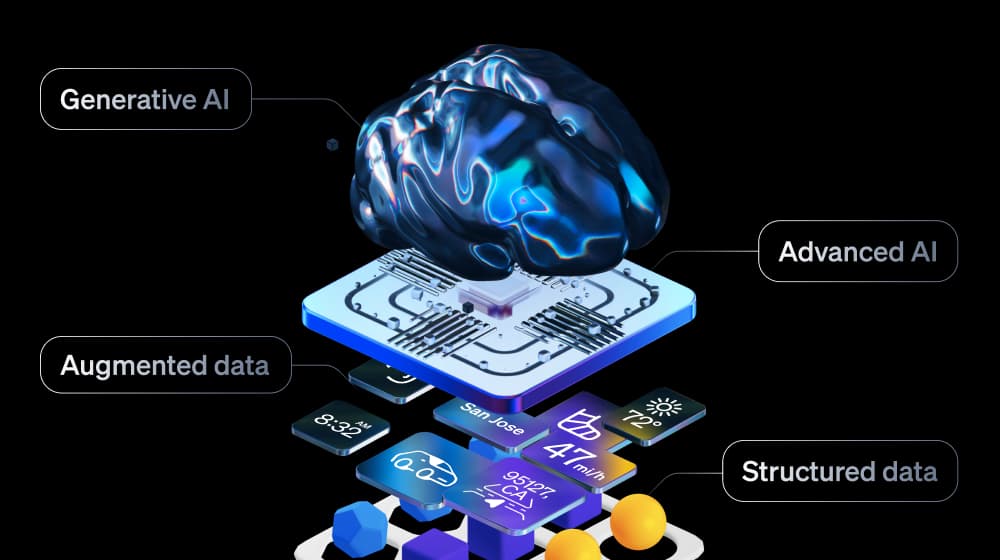
Traditional artificial intelligence in claims is built for prediction. It scores fraud risk, predicts severity, routes files, and flags likely outcomes based on structured inputs. You already rely on those capabilities, but that is not where most claims work actually lives. The majority of a claim is buried in unstructured content:
- Police report
- Medical records
- Adjuster notes
- Emails
- PDFs
- Recorded statements
- Photos
- Claimant narratives
Generative AI applies large language models to insurance claims. It can read across unstructured inputs, synthesize them, identify inconsistencies, draft responses, and convert messy information into structured outputs that a claims organization can act on.
In claims, where roughly 80% of data is unstructured, the opportunity is huge. Bain & Company estimates generative AI could reduce Loss Adjustment Expenses (LAE) by 20–25% and cut leakage by 30–50%, creating more than $100 billion in value for the P&C industry. The use cases behind those numbers are specific: FNOL automation, claims file summarization, policyholder communication, and fraud pattern detection.
Generative AI is redefining the pace and precision of claims handling by taking care of the unstructured, high-volume work that traditional automation has never been able to touch.
According to Accenture’s Pulse of Change survey, 90% of insurance executives plan to increase AI investment in 2026, with generative and agentic AI leading the priority list. When a carrier like Nationwide publicly allocates 20% of a $1.5 billion technology budget to AI, the signal is clear: this is no longer a pilot-stage commitment.
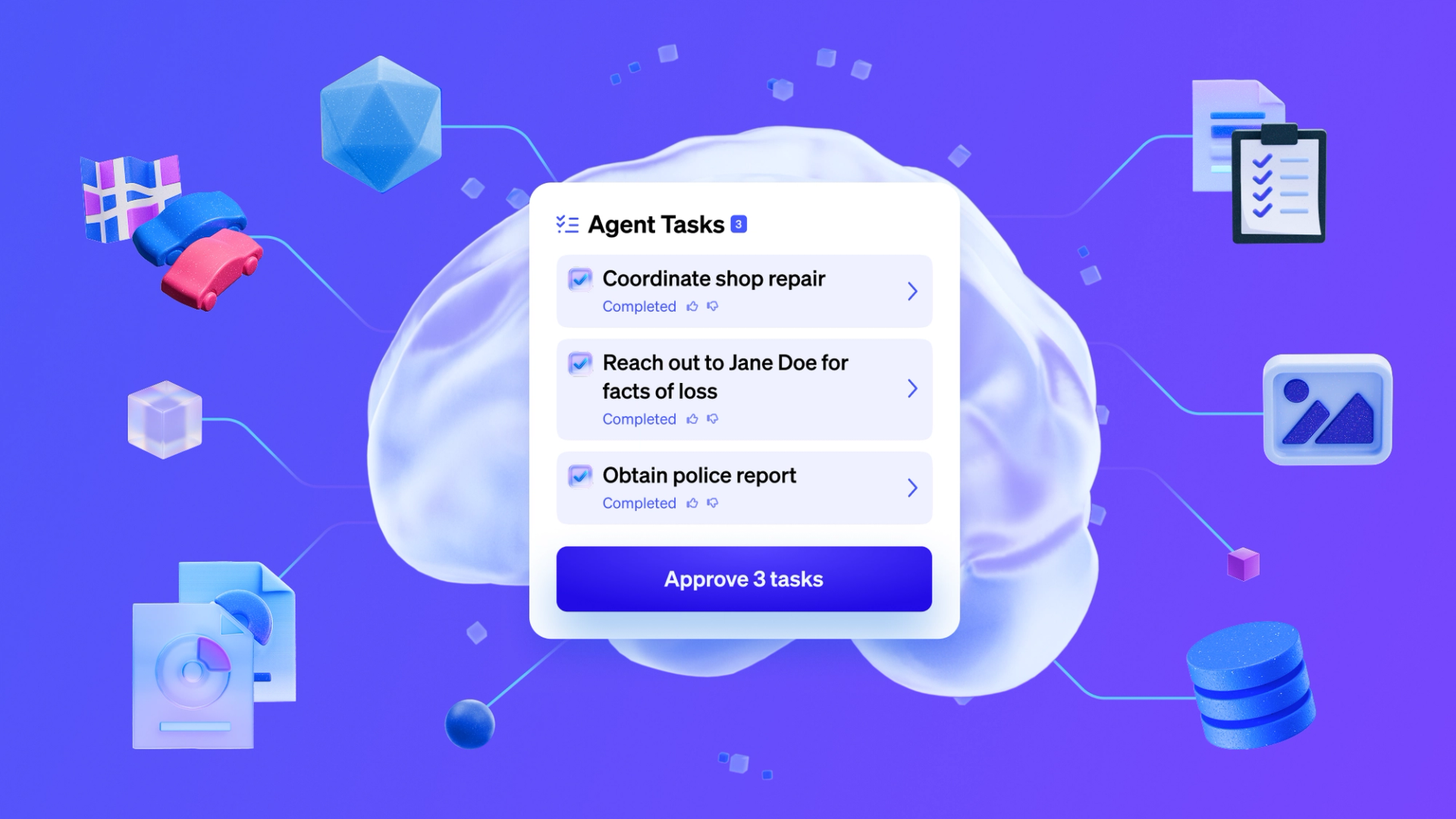
Think of the difference this way: Traditional AI tells your adjusters which file to open next. Generative AI in insurance claims processing tells them what is inside the file and what to do about it. That shift, from task routing to decision support, is what frees adjusters to focus on judgment, negotiation, and coverage decisions.
Gen AI for FNOL automation: Intake that understands context
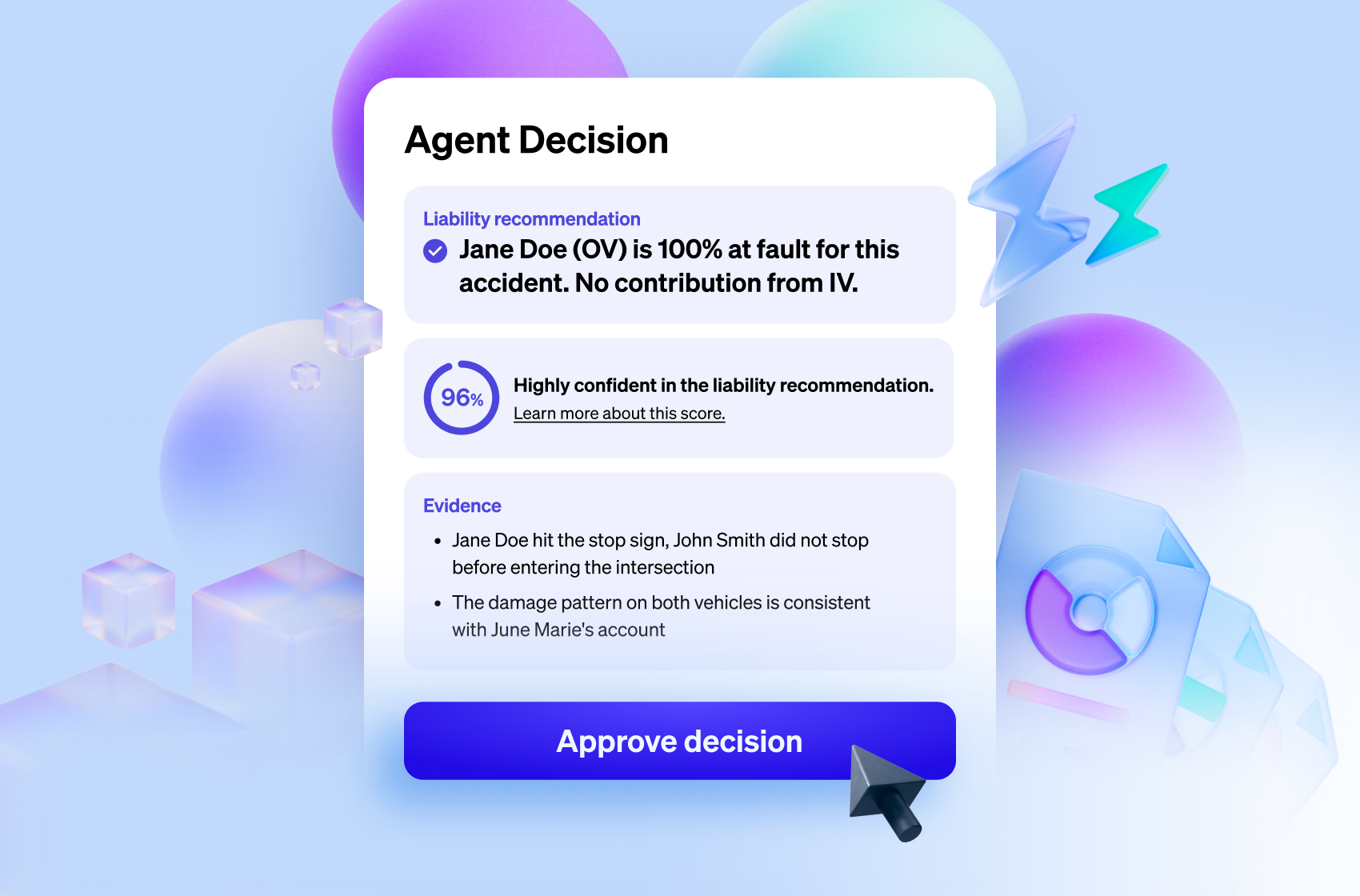
FNOL is where most claims break. Your adjusters inherit the problem when data is still incomplete and unstructured. They reconstruct the claim from fragments: a narrative, a police report, a few form fields. The rest of the lifecycle gets spent fixing what intake should have captured.
Generative AI changes FNOL from data capture to understanding.
A digital claims intake workflow captures structured inputs from the start of every claim. Combined with a guided telephonic FNOL solution that walks CSRs through adaptive intake questions, you gather higher-quality data regardless of how the claim is reported.
Before your adjuster opens the file, generative AI reads the claimant's description of the loss event and:
- Extracts structured data from free-form narratives
- Identifies ambiguities in the reported facts
- Flags missing information that would delay the claim
- Generates relevant follow-up questions to close gaps
The result is a claim that arrives with the right data already organized, not a fragmented collection of narratives that require hours of follow-up.
Police report parsing is one of the top gen AI use cases already in deployment. The reports arrive in thousands of different formats from city and state agencies. Gen AI extracts facts from unstructured text and surfaces them as structured claim data without manual re-entry, so your adjusters open a file with the relevant facts organized rather than buried in a scanned PDF.
Gen AI also routes claims based on what the content actually says, not just the line-of-business label. A claim described in text as involving a commercial vehicle, disputed liability, and prior property damage is routed differently than a simple single-car collision, even if both arrive as “auto claims.” That content-level routing reduces misassignment and speeds time to first adjuster contact, and triggers downstream actions like automated service assignment when a claim needs a rental, repair, or tow.
Policyholder communication: From template responses to intelligent conversation
Communication is where policyholders feel the claims experience most directly, and it is where a lot of your operational inefficiency hides. People call back when they get vague updates or generic status messages. Call backs create repeat inbound volume, more manual work, and higher LAE.
Policyholders are generally positive about AI interactions, according to a survey of 6,000 insurance customers. They want speed, 24/7 availability, and tailored responses. They also want to know when they are talking to AI, and they want access to a human when the situation requires it.
Template communication has an obvious ceiling. A pre-written status update only tells a claimant their claim is “in progress.” Gen AI can respond with full claim context in real time, explaining:
- Which documents are still outstanding
- What the next steps are
- When to expect contact.
This level of detail is the difference between a policyholder who waits patiently and one who calls back, repeatedly, consuming adjuster time and inflating LAE.
How agentic AI cuts call volume and lifts NPS
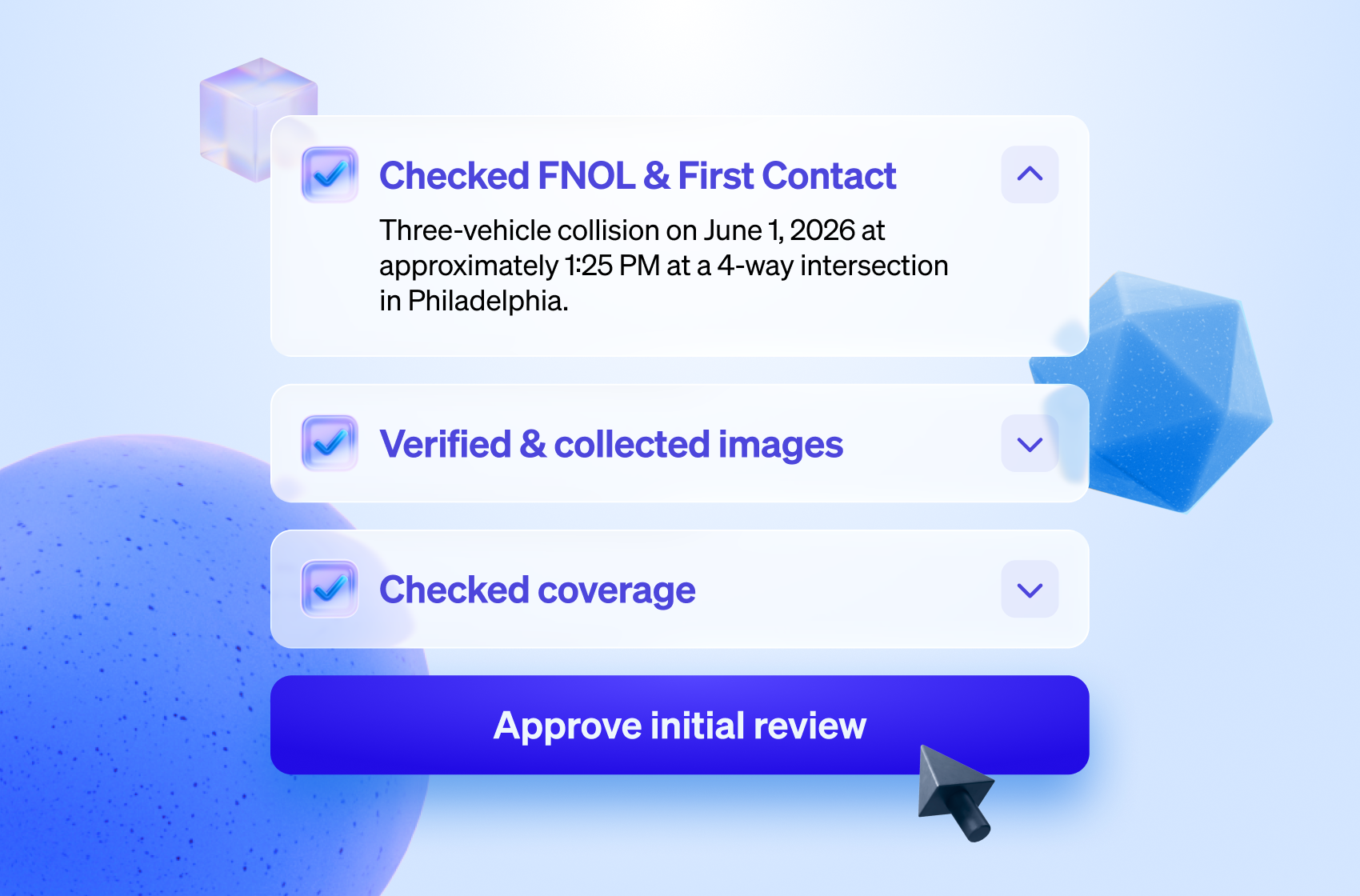
Assured's agentic AI, Emma, handles roughly 70% of policyholder interactions autonomously, including status updates, documentation requests, and coverage questions. What separates Emma from a rules-based chatbot? Emma reasons about the specific claim, understanding context, identifying the Next Best Action, and communicating with the empathy and precision that stressful loss events demand.
When a policyholder asks a question about their claim, Emma doesn’t retrieve a scripted response. It reads the claim file, identifies the relevant information, and drafts a response that is specific to that claimant and that loss. Combined with a centralized omnichannel messaging solution, Emma can communicate seamlessly with policyholders across SMS, email, and in-app chat.
Your inbound call volume drops because policyholders get the specific answers they need without calling in. NPS (Net Promoter Score) improves at the moment that matters most: when a policyholder is navigating a loss. That combination of lower cost and higher satisfaction is what gen AI makes possible at scale.
Claims file summarization and adjuster productivity
AI claims file summarization is one of the fastest gen AI wins available to your operation, and one of the lowest-risk. Your adjusters receive a synthesized view of a claim before they engage with it. A claims file can contain dozens of documents:
- FNOL report
- Police report
- Recorded statements
- Repair estimates
- Medical records.
- Prior claim history
- Coverage documentation
- Adjuster notes from prior contacts
Your adjusters spend significant time reading and synthesizing this material before they can take action.
Gen AI reads the full file and produces a structured summary:
- Loss facts
- Coverage position
- Outstanding documentation
- Key inconsistencies across documents
- Recommended next steps
Adjusters review and act rather than reconstructing. The time savings are immediate and compound across every file on the desk.
This use case has a short path from pilot to value. It does not require deep integration into core claims systems to begin generating productivity gains, and it carries lower regulatory risk than external-facing gen AI because every output is reviewed by your adjuster before action is taken.
Call summarization, transforming recorded adjuster-claimant conversations into structured notes, is a closely related use case. Combined with file summarization, it changes how your adjusters spend their time: More on judgment and claimant interaction, less on documentation and reconstruction.

Fraud signal detection: Where gen AI adds a new layer
Gen AI does not replace traditional fraud detection models. It adds a reasoning layer that reads across documents and identifies the kind of inconsistencies that pattern-matching models miss.
Traditional fraud detection in claims works by scoring structured data: coverage timing, claimant history, provider patterns, claim frequency. These models are strong at pattern-level signals but cannot read a claimant’s written statement and identify that the narrative contradicts the loss date in the police report.
Gen AI can do exactly that: Rather than generating a risk score alone, it reasons across unstructured claim documents to:
- Flag inconsistencies between documents
- Identify language patterns associated with fraudulent claims
- Surface specific anomalies for your adjuster's review
The difference is specificity. Where a traditional model might flag a claim as “high risk,” gen AI can tell the adjuster exactly why: The claimant’s statement describes an intersection collision, but the police report documents a rear-end impact on a highway.
Traditional AI and gen AI produce a stronger fraud signal together than either does alone. Each layer contributes something the other cannot:
- Traditional ML (machine learning) model: Flags the claim as elevated risk based on structured data patterns
- Gen AI layer: Explains specifically which documents, statements, or inconsistencies drove that flag
That combination changes what a Special Investigations Unit referral actually looks like: Instead of presenting a risk score, your adjuster presents a referral backed by specific documented inconsistencies: which statements conflict, which documents disagree, and where the timeline breaks down. Gen AI produces the narrative, not just the number.
Assured’s AI-powered fraud detection surfaces these signals before your adjusters open a file. It combines structured FNOL data with cross-claim analysis and multi-party corroboration, cross-referencing claimant statements, third-party reports, and repair documentation to flag inconsistencies across every perspective on the loss.
Deploy generative AI in your claims operation today
You do not need a multi-year transformation roadmap to start seeing results. Start with high-value, low-risk use cases where every output is reviewed by your adjusters before a claim decision is made.
Gen AI performs best when it starts with clean, structured inputs from FNOL, which is exactly what Assured captures from the first interaction. Every output is explainable and auditable, built to align with evolving AI governance expectations from the National Association of Insurance Commissioners (NAIC). And Assured's AI claims automation P&C pilots deploy alongside your existing core systems in weeks, not quarters.
Put gen AI to work in your claims operation. See Assured in action.
Last modified on August 25, 2026

Subscribe for updates
You might also like

Straight-through processing in insurance: What it means for claims
Explore how straight-through processing improves speed, costs, and customer experience.
By The Assured Team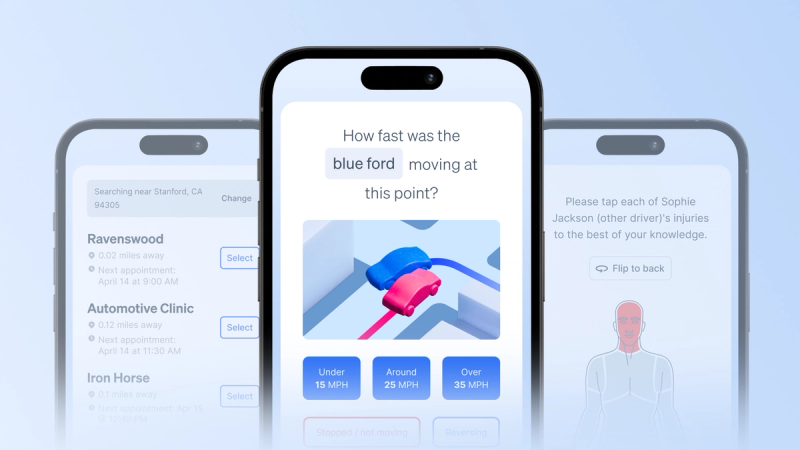


Subscribe for updates
By providing your email, you indicate you have read and understood our Privacy Policy.