

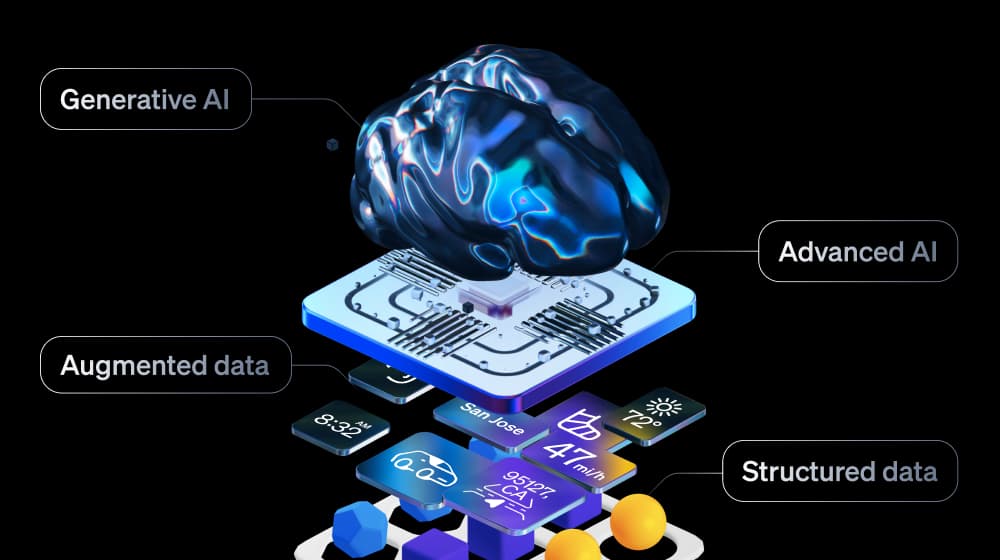


First notice of loss (FNOL) is where claims gain momentum or accumulate friction. When intake data is incomplete or unstructured, everything downstream slows. When FNOL captures clean, structured data from the start, automation works and straight-through processing is possible.
Digital FNOL automation reduces claim handling time by up to 30% by capturing quality, machine-readable data from the start of every claim. In an industry where customer expectations continue to rise, structured FNOL is no longer a “nice to have.” It’s the foundation of operational efficiency for modern carriers.
Carriers cannot achieve straight-through processing without first understanding how FNOL automation works and how it fits into the overall claims lifecycle. From cycle time to adjuster workload, FNOL determines the course of the entire claim.




Assured: The leading AI platform in P&C
Trusted by the nation’s top insurers, Assured processes tens of millions of claims each year, delivering straight-through processing at enterprise scale.
Learn moreHow Assured’s FNOL automation works
Assured’s FNOL automation uses structured digital intake and AI-driven solutions to capture loss information accurately and route claims with minimal manual intervention. The goal is to standardize data at the moment a claim is filed so everything downstream moves faster, cleaner, and with fewer handoffs.
Traditional phone-based FNOL relies on live conversations between claimants and call center representatives. Information is gathered through unstructured dialogue and recorded as narrative notes. Even with scripts, agents ask questions differently, follow up inconsistently, and summarize in their own words.
With approximately 4,500 variables per claim, standardizing intake at the source becomes critical.
Assured’s digital FNOL replaces phone calls with web or mobile self-service experiences. Claimants submit information through forms instead of speaking to an agent. This process improves accessibility and reduces call volume. However, if those tools rely on open-ended text fields, the data requires the same downstream cleanup as call center notes. Digital intake alone requires intelligent automation to deliver structured data.
Fully automated FNOL captures complete data
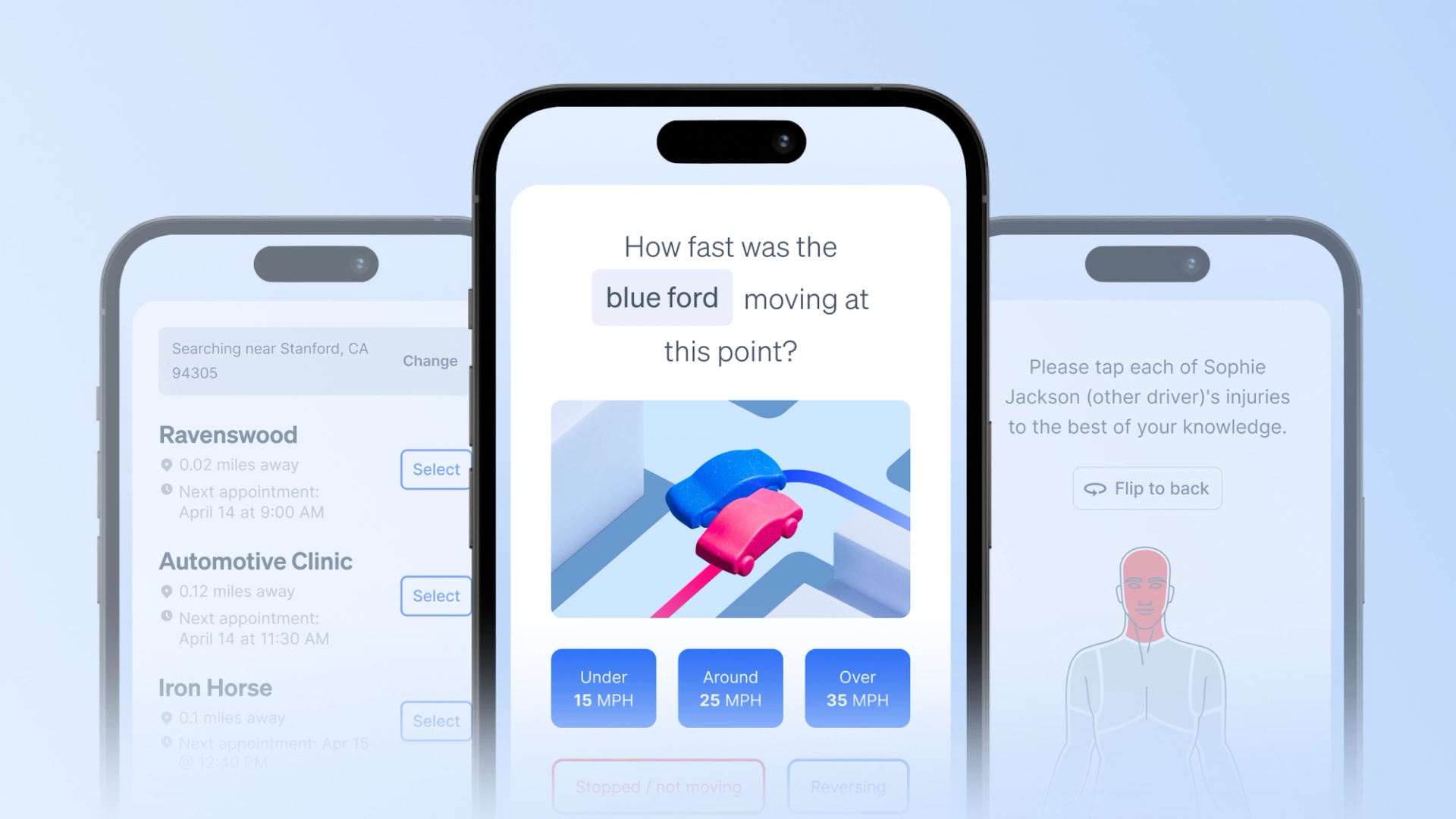
Fully automated FNOL combines guided digital FNOL intake with intelligent call center solutions to ensure intake is structured across channels. Dynamic question flows adapt in real-time based on prior answers and external data sources, ensuring that every claim captures exactly the information needed.
The FNOL system captures complete, machine-readable data by design. Missing information is flagged immediately. Irrelevant questions are skipped. Follow-ups are triggered automatically when needed.
Digital FNOL intake uses intuitive, mobile-friendly flows to make it easy for policyholders to complete FNOL on the go. Call center representatives use guided, structured interfaces that enforce the same validation rules as their digital counterparts. Leading digital FNOL solutions support more than one billion permutations of complex flows, handling everything from simple glass claims to multi-vehicle collisions with injuries.
When FNOL is automated correctly, claims move faster, and adjusters intervene only when judgment is required. This enables straight-through processing at scale.
Why FNOL automation is essential for modern claims operations
Claim volume continues to rise. Experienced adjusters remain difficult to hire. Policyholders expect fast, digital experiences similar to what they get from banks and retailers. Regulatory scrutiny continues to increase, with greater emphasis on auditability, consistency, and defensible decisions. Modern claims operations require structured data to meet these demands.
When intake data is incomplete or unclear, adjusters spend time on follow-up work that delays the claim before it gains momentum. Each missing detail triggers another call, another message, another handoff.
Structured FNOL also enables automatic service assignment by routing eligible claims immediately and helping carriers schedule inspections, repairs, rentals, and other next steps without manual coordination.
The downstream impact is measurable. Recent insights from a 2023 JD Power study highlight the impact of FNOL on overall claims processing time. Claims reported through digital FNOL average a 15-day cycle time, compared to 28 days for non-digital intake. That 13-day gap translates directly into higher loss adjustment expense (LAE), increased adjuster workload, and lower customer satisfaction. Faster resolution delivers operational and financial advantages.
FNOL automation has become foundational to operational resilience. Research by Global Insurance Intelligence suggests that carriers who embrace digital transformation can process claims faster, more accurately, and at lower cost than competitors still relying on manual intake.
How modern FNOL software solves core challenges
Modern FNOL software transforms data quality at the source. Instead of relying on free-text narratives, advanced FNOL solutions guide claimants through structured, context-aware question flows. Data is captured the first time, reducing rework and enabling automation downstream.
This structured foundation directly addresses the core operational pressures carriers face:
- Rising claim volumes meet finite resources: Carriers see faster cycle times because claims enter the system complete and ready to process. Automated triage and routing handle complexity that previously required manual review. Digital First Contact solutions make initial reach out to involved parties automatic and seamless, and automated triage and routing handle complexity that previously required manual review.
- Adjuster productivity reaches new levels: LAE decreases as follow-up work and manual correction drop. Adjuster productivity improves because teams spend less time chasing information and more time making decisions that require human judgment.
- Customer expectations align with operational capacity: Digital intake meets policyholder demands for modern experiences while simultaneously improving backend efficiency. Carriers deliver both better experiences and better economics.
These benefits align directly with the core automation pillars driving modern claims operations: Speed to value through faster resolution, structured data as the foundation for automation, and the ability to scale without proportional headcount increases.
The 7-stage FNOL automation process
The FNOL automation process follows seven major stages, each designed to remove manual work and improve accuracy. Understanding each stage helps claims leaders identify where their current processes can improve and where automation delivers the greatest impact.
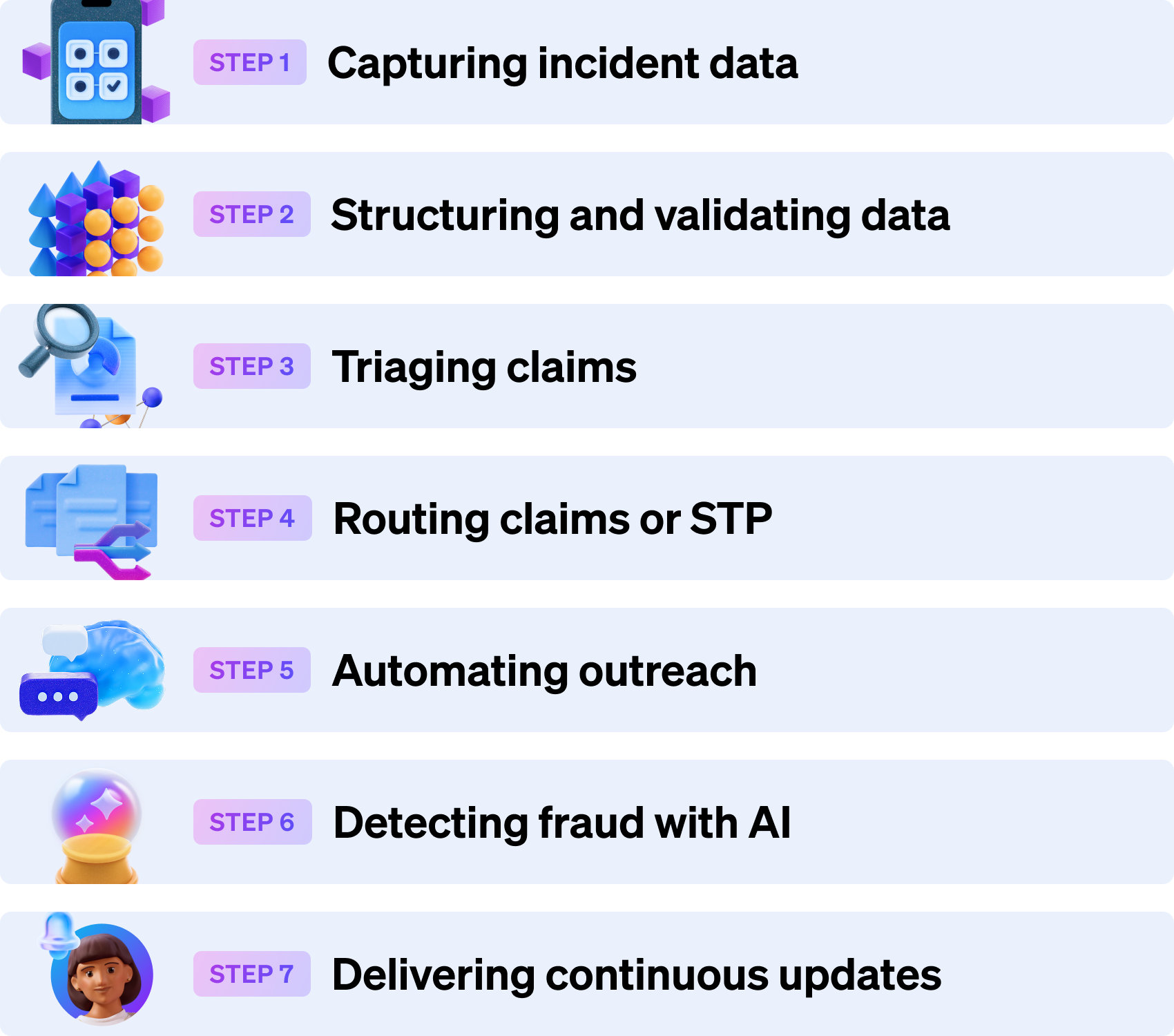
Step 1: Capturing incident data through digital channels
Claims are initiated through web portals, mobile apps, text-based links, chat interfaces, agent portals, or the call center. Using digital FNOL, policyholders are guided through structured prompts that adapt in real-time based on prior answers and external data sources.
Digital FNOL solutions make it easy to upload photos, share location data, and submit supporting documents such as receipts. The result is a simpler, more intuitive experience for policyholders and more complete information for carriers from the start.
Step 2: Structuring and validating data in real time
Incoming information is automatically captured in machine-readable formats. Validation rules check for completeness, logical consistency, and required dependencies. If information is missing, the system triggers automated prompts rather than manual adjuster follow-ups. This eliminates one of the largest sources of cycle-time delay.
Step 3: Triaging claims with intelligent severity scoring
With structured data in place, automated FNOL routing becomes possible. Claims are evaluated and routed based on severity, complexity, coverage signals, and jurisdictional requirements:
- Stolen vehicles route to specialized units
- Minor collisions follow low-complexity paths
- Water damage routes to property adjusters
This is where incident claims management software shows its value. Structured inputs reduce misrouting and ensure that claims enter the correct workflow on the first pass.
For catastrophe events, CAT-specific FNOL flows help carriers ingest high volumes quickly, adapt questions by incident type, and triage claims more consistently under pressure.
Step 4: Routing claims or straight-through processing
Claims are either routed to an adjuster or flagged as eligible for straight-through processing. Carriers using structured FNOL routinely achieve 50–80% STP for low-complexity claims.
Data quality enables this capability: When every field is validated and standardized at intake, downstream systems can make decisions without human intervention. With claims properly routed, automation extends to follow-up and communication.
Step 5: Automating outreach and document collection
Follow-ups happen automatically via email or text. Missing photos, statements, or receipts can be requested without adjuster involvement. Assured's agentic AI Emma handles nearly 70% of these interactions autonomously. By managing the high-friction work that traditionally slows claims down, Emma allows adjusters to focus on higher-value tasks.
Step 6: Detecting fraud with early AI-powered checks
Unlike traditional fraud detection, which relies primarily on static policy data and post-intake review, Assured’s fraud detection engine uses adaptive FNOL questions to probe for inconsistencies based on prior answers, claim context, and external data. AI monitors claimant behavior, matches patterns across claims and policyholders, detects anomalies, and dynamically probes suspicious responses with targeted follow-up questions during intake.
Step 7: Delivering continuous updates to policyholders
Automated updates keep claimants informed through their preferred channels, whether that’s SMS, email, or a phone call. Omnichannel claims messaging solutions allow communication with claimants, service providers, witnesses, passengers, and even other adjusters to get information quickly and easily.
This continuous communication transforms the claims experience from an opaque waiting game into a transparent process where policyholders always know what's happening next.
Core technology requirements for FNOL automation

FNOL automation requires a tightly integrated technology stack designed to capture structured data at intake, apply business logic consistently, and move claims forward with minimal manual intervention.
Beyond structured intake, FNOL automation relies on decisioning, workflow orchestration, and AI to act on that data in real-time. Business rules determine routing, triage, and next steps, while automation handles follow-ups, service assignment, and more. When these components work together, claims can progress automatically, with adjusters stepping in only when judgment is required.
FNOL software for digital intake
Effective FNOL software includes guided forms, validation logic, photo capture, and identity verification — all built around structured data models. Look for solutions with configurable business rules that work out of the box but can be fully customized to match your needs and workstreams.
AI-driven optimization should dynamically adapt questions, eliminating repetition and irrelevant prompts while maintaining high completion rates.
Data pipelines for structured, machine-readable FNOL
The critical differentiator is structured, machine-readable data at FNOL. This foundation enables deeper automation, stronger auditability, and consistent outcomes across claims. Because data is structured from the start, AI can trigger specific follow-up questions, make policy-driven decisions, and assemble downstream summaries automatically—capabilities that are impossible with loose, open-ended inputs.
Rules engines and AI decisioning
Modern FNOL automation uses rules engines and AI to route claims, assess severity, and trigger the right follow-up actions automatically. Structured intake data enables early severity scoring, intelligent claim assignment, and timely documentation prompts without waiting for manual review.
AI augments adjuster expertise by handling routine decisions, identifying what matters most, and surfacing the right information at the right time. The result is faster triage, more consistent handling, and human judgment applied where it adds the most value.
Messaging and agentic AI
The next step relates to communication. Unified, omnichannel messaging keeps conversations centralized, making it easy for adjusters to see all the claim-related communication in one place.
Intelligent agentic AI solutions help automate follow-up. They understand claim context, answer routine questions instantly, and guide claimants through exactly what to submit. These agentic AI assistants are designed to collaborate with adjusters. Adjusters can assign tasks, like collecting injury details or clarifying collision dynamics, with a single click.
These solutions handle the high-friction work that usually slows down claims, so adjusters are free to focus on decisions that actually require human judgment.
How FNOL automation delivers measurable outcomes
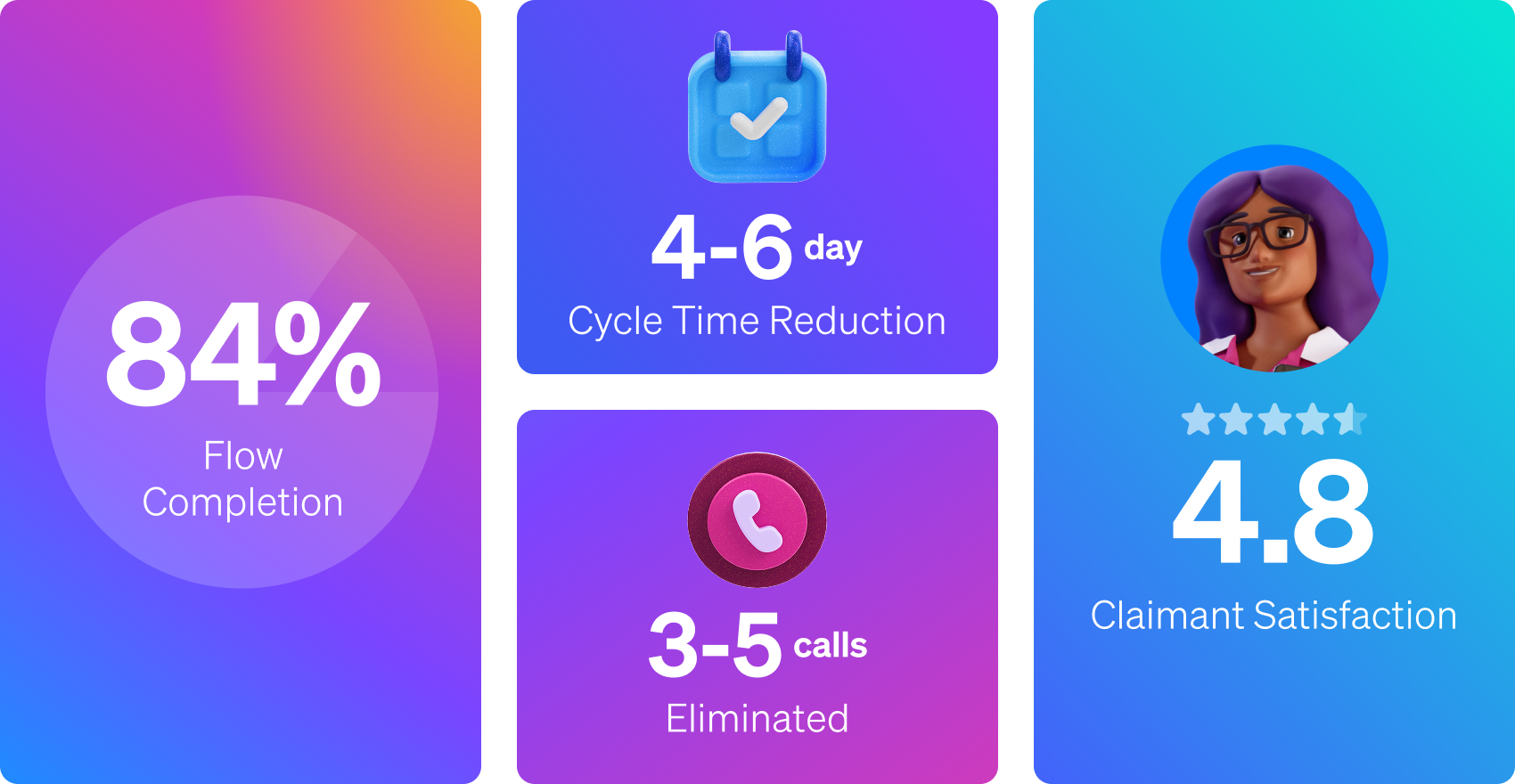
Carriers using Assured’s digital FNOL solution achieve:
- 4-6 day reduction in cycle time
- 3-5 fewer phone calls per claim
- 84% flow completion
- 4.8/5 customer satisfaction score
These results stem from structured data captured at intake. Every downstream process becomes more efficient. Triage is faster because the system already knows claim severity. Assignment is more accurate because routing rules can operate on validated fields. Follow-up is automated because the platform knows exactly what's missing.
Automation multiplies the value of quality data
Robotic Process Automation (RPA) combined with AI can achieve up to 90% reduction in processing time when working with structured data. Solving data quality problems at intake unlocks every downstream efficiency gain.
FNOL automation creates fewer handoffs, less rework, faster follow-ups, and reduced manual entry. All of this adds up to reduced cycle time. It also improves compliance and auditability. Every data point is captured in a defined field. Every decision is traceable. Every interaction is logged. This creates a defensible record that supports regulatory review and litigation response.
Adjusters spend less time on back-and-forth and more time on investigation, resolution, and policyholder communication. FNOL automation allows them to focus on more rewarding, higher-value work.
Common FNOL automation challenges and solutions
Claims organizations operate within complex environments shaped by legacy core systems, multiple intake channels, and evolving staffing models. Years of large, disruptive technology projects have created understandable caution around automation initiatives.
Adjusters wonder how automation will affect their roles and decision quality. IT teams consider implementation timelines, integration complexity, and maintenance burden. Executives evaluate whether efficiency gains will materialize quickly enough to justify investment. These concerns reflect experiences with older automation approaches that required system replacement or an all-or-nothing change.
How modern digital FNOL platforms overcome common obstacles
Modern digital FNOL platforms take a fundamentally different approach. They work alongside core systems. Assured’s digital FNOL solution uses API-driven architecture to connect seamlessly to core systems, keeping existing workflows intact while unlocking full automation.
This modular approach allows carriers to start small and expand deliberately. Teams can deploy digital FNOL on a small scale and see measurable improvements in cycle time, data quality, and adjuster workload before expanding further. As confidence grows, carriers can incrementally leverage additional solutions, expanding automation without operational risk.
The result is speed to value without operational risk. Carriers can modernize intake one claim at a time, building organizational confidence while delivering real outcomes from day one.
How to evaluate FNOL automation software vendors
Five critical criteria separate structured data platforms from digitized forms.
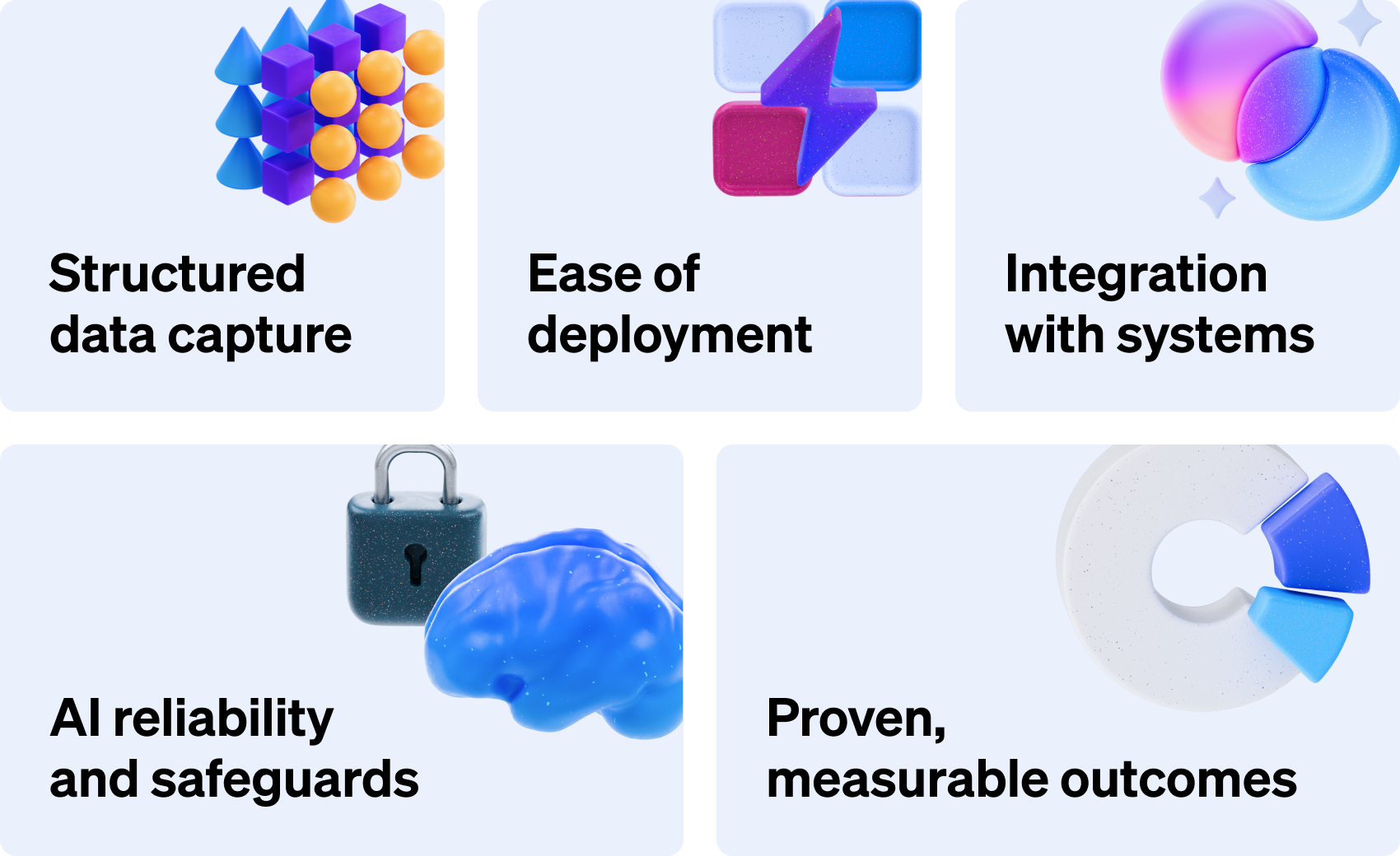
Depth of structured data capture
This is the most critical differentiator. Many platforms still rely on unstructured inputs, even when delivered through digital channels. Free-text narratives, static forms, and document uploads limit what can be automated downstream. Few solutions deliver truly machine-readable FNOL at scale and across channels.
Ask vendors how they capture structured data, how many flow permutations they support, and whether questions adapt dynamically based on claim context, jurisdiction, and policy details. Also, ask how data quality is validated at intake. This is the difference between partial automation and true straight-through processing.
Ease of deployment
Automation should deliver value within months, not years. Look for solutions that support integration-free or low-lift deployments and demonstrate speed to value. The best vendors offer a “test before you invest” model, letting you see value quickly with real-world pilots.
Ask how quickly the solution can be deployed, how configuration changes are handled, and whether business users can adjust flows without engineering support.
Integration with existing systems
FNOL automation software should fit around your core systems. API-driven architecture should connect cleanly to major core platforms while preserving your existing business rules and workflows.
Ask whether vendors have native integrations to leading core system APIs, robust middleware, and a library of plug-in components. Verify that integrations will work seamlessly with your existing systems and flexibly adapt as you scale. The best vendors will make it easy to deploy quickly and see value instantly with minimal IT lift.
AI reliability and safeguards
Battle-tested across millions of interactions, Assured Messaging and Emma solutions are equipped with smart safeguards to navigate complex, high-stakes conversations, escalate when needed, and protect sensitive information.
Ask how the system handles edge cases, how sensitive information is protected, and how it maintains compliance with regulatory requirements. AI should reduce risk while enabling automation.
Proven, measurable outcomes
Focus on results. Look for measurable ranges in cycle time reduction, loss adjustment expense (LAE) improvement, adjuster productivity, and Net Promoter Score (NPS).
Ask for case studies that reflect environments similar to yours and proof that outcomes are achieved in production, not pilots.
FNOL automation case study: Real-world results
One auto carrier was struggling with high call volume and inconsistent data capture. Call center representatives followed different scripts, captured different information, and spent hours on follow-up calls to fill gaps. Adjusters received incomplete files, cycle times exceeded industry benchmarks, and customer satisfaction lagged peers.
The carrier deployed structured FNOL automation. Digital intake flows replaced paper forms and standardized call scripts. Built-in validation ensured the required data was captured upfront. AI-powered claims evaluation enabled faster triage and routing. Automated outreach handled document collection.
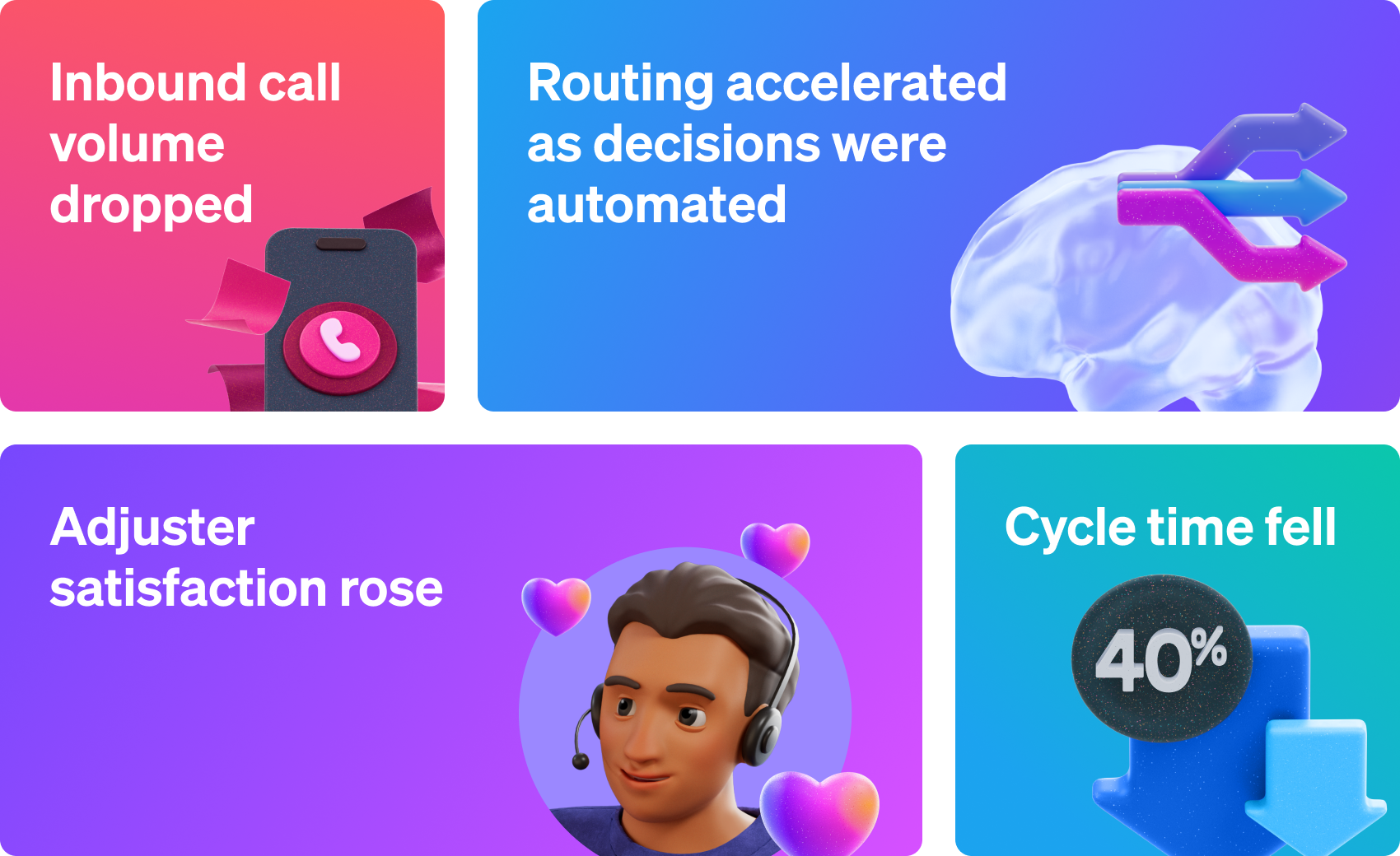
The impact was immediate:
- Inbound call volume dropped as claimants received proactive updates
- Routing accelerated as decisions were automated
- Cycle time fell by 40% as rework disappeared
- Adjuster satisfaction rose as data quality improved
The evolution of FNOL automation
Current deployments point to three emerging patterns. As more carriers adopt structured intake, network effects will emerge: Shared fraud signals, benchmarking data, and industry-wide process improvements. Carriers building structured data foundations today position themselves to participate in these collaborative advantages.
Predictive FNOL will use historical patterns and external signals to anticipate claims before they're even filed, enabling proactive outreach after weather events or detected accidents. Some carriers already use telematics and weather data to initiate claims processes before policyholders report losses.
Omnichannel intake will expand beyond web and mobile to include voice AI, telematics-triggered flows, and embedded insurance experiences. Policyholders will expect claims filing to be as easy as sending a text message. Real-time communication will become the standard expectation across all demographics.
The industry will shift from automation around messy data to automation powered by structured data. This is the fundamental transformation that enables carriers to address rising litigation inflation and positions them for long-term success. Carriers who invest in structured FNOL now will have the data foundation to adopt whatever AI capabilities emerge next.
The future belongs to carriers who control data quality at the source. Everything else follows from there.
See FNOL automation in action
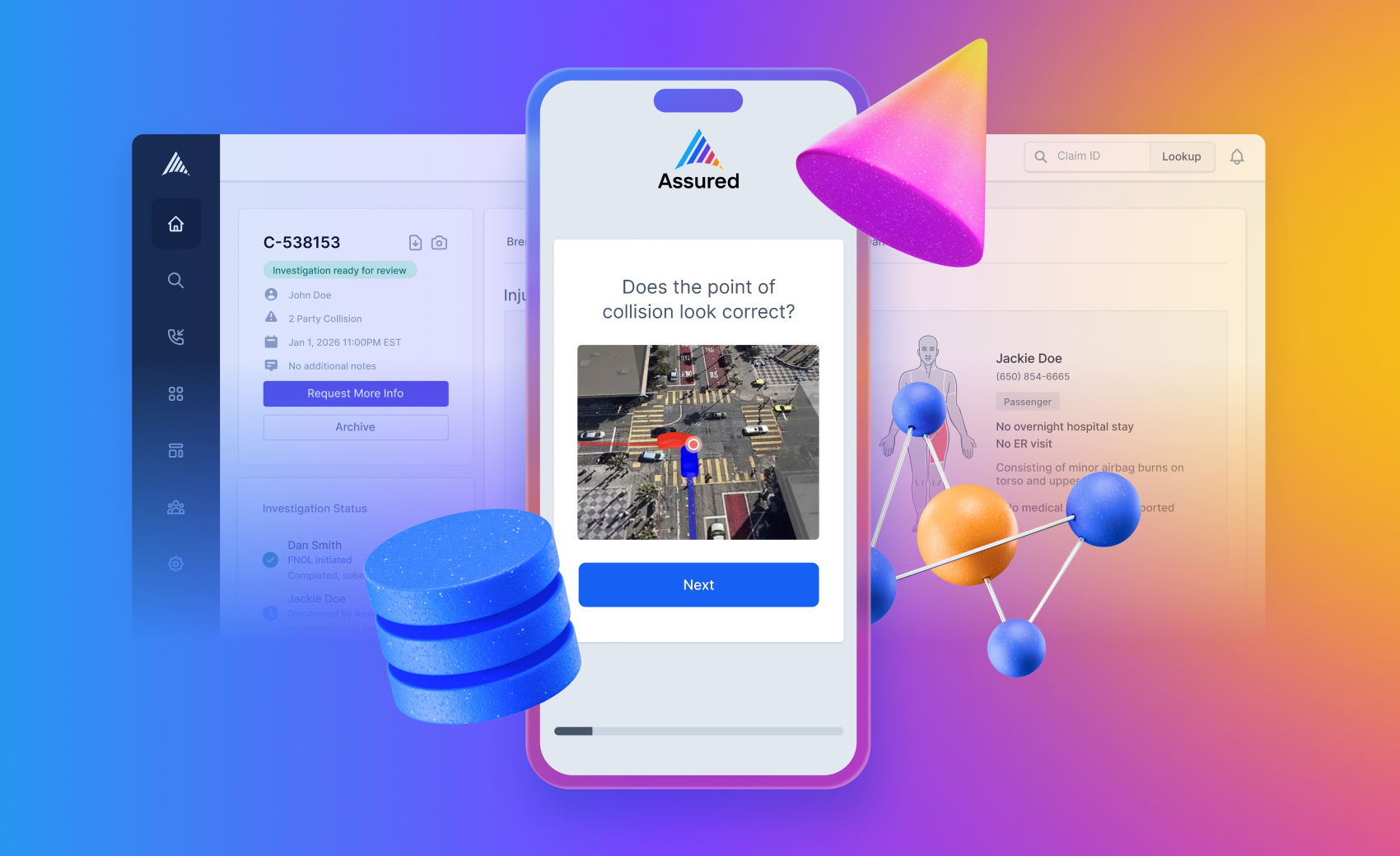
Digital FNOL automation delivers faster decisions, lower costs, and better customer experiences across the claims lifecycle. Structured intake unlocks automation that was previously impossible.
Assured’s industry-leading FNOL solution digitally captures structured data to build a solid foundation for decision-making and downstream automation, all while delivering a best-in-class customer experience.
See how Assured helps carriers cut cycle time by 4 to 6 days. Get started easily with an integration-free pilot. Request a demo to see Assured in action.
Last modified on August 25, 2026

Subscribe for updates
You might also like
Claims automation: How AI is reshaping P&C operations
Increase efficiency, reduce friction, and accelerate decisions with AI-powered claims automation.
By The Assured Team

Subscribe for updates
By providing your email, you indicate you have read and understood our Privacy Policy.