





Claims cycle time has jumped 6 days since 2022, and it’s now nearly two weeks longer than policyholders expect. This massive gap between customer expectations and carrier delivery doesn’t happen because of downstream failures. It happens because the data collected at First Notice of Loss (FNOL) is poor quality.
FNOL sets the trajectory of every claim. When FNOL captures quality data, claims move faster, automation works as intended, and adjusters spend their time on decisions rather than cleanup.
This guide answers “what is FNOL in insurance” and shows you how to transform it into your strategic advantage. You'll learn what data to collect, how the process flows, and why structured data unlocks the automation your policyholders expect.




Assured: The leading AI platform in P&C
Trusted by the nation’s top insurers, Assured processes tens of millions of claims each year, delivering straight-through processing at enterprise scale.
Learn moreWhy FNOL matters: Impact on cycle time, LAE & customer satisfaction
FNOL is the single biggest determinant of claim cycle time, loss adjustment expenses (LAE), adjuster workload, and customer satisfaction.
Consumer expectations are rising. Policyholders expect real-time responses, yet the gap is massive: 12 days between expectation and reality.
FNOL data quality determines downstream efficiency. Misrouted claims land on the wrong adjuster's desk. Missing information triggers follow-up calls. Inconsistent summaries slow investigations. Bottlenecks compound at every stage.
For Claims Operations Leaders, CCOs, and Innovation Officers, this represents both a problem and an opportunity. The carriers who capture structured data at first notice of loss reduce friction across every downstream workflow—from triage to settlement.
FNOL has evolved from a compliance checkpoint into a strategic opportunity to standardize data, enable automation, and close the expectation gap.
FNOL has evolved from a compliance checkpoint into a strategic opportunity to standardize data, enable automation, and close the expectation gap. Before diving into how to close this gap, it's important to establish a foundational understanding of what FNOL is and why it's become the focal point of claims transformation efforts across the P&C insurance industry.
What is FNOL in insurance?
Understanding the meaning of FNOL is essential for claims operations. First Notice of Loss is the starting point of every claim and the single biggest determinant of cycle time, accuracy, and customer satisfaction.
The stakes are high: According to the J.D. Power Study, 80% of auto insurance customers who have poor claims experiences have already left or plan to leave that carrier.
80% of auto insurance customers who have poor claims experiences have already left or plan to leave that carrier.
Delivering an exceptional customer experience starts at FNOL. When a policyholder files a claim, they’re often overwhelmed. FNOL needs to be clear, intuitive, and easy — not another source of stress. Carriers that get this moment right move claims faster and retain more customers. Digital FNOL solutions deliver the modern experience customers expect.
Understanding why FNOL matters is the first step. The next step is understanding how it works and, more importantly, why the quality of data you capture at this moment determines every downstream outcome. The difference between effective and ineffective FNOL comes down to data structure.
How FNOL in insurance works & why data quality matters
Now that we've established why FNOL matters, let's explore what is FNOL in practice. The first formal report of an incident submitted by the policyholder to their insurer is called First Notice of Loss. Whether it's a fender-bender, a burst pipe, or storm damage to a roof, FNOL is where the claims journey officially begins.
A typical FNOL report in insurance includes the time, nature, and circumstances of the loss. It kickstarts the entire claims process: Every downstream decision (coverage verification, adjuster assignment, reserve setting, investigation, and settlement) relies on the data captured at this moment.
The FNOL meaning within insurance is straightforward, but its implications are profound. Incomplete or inaccurate data triggers manual follow-ups and extends cycle time. When a claimant forgets to mention a third party or provides vague damage descriptions, adjusters spend hours chasing details instead of resolving claims.
The root cause of these delays and inefficiencies lies in how FNOL data is captured: Structured versus unstructured.
Structured data vs. unstructured data
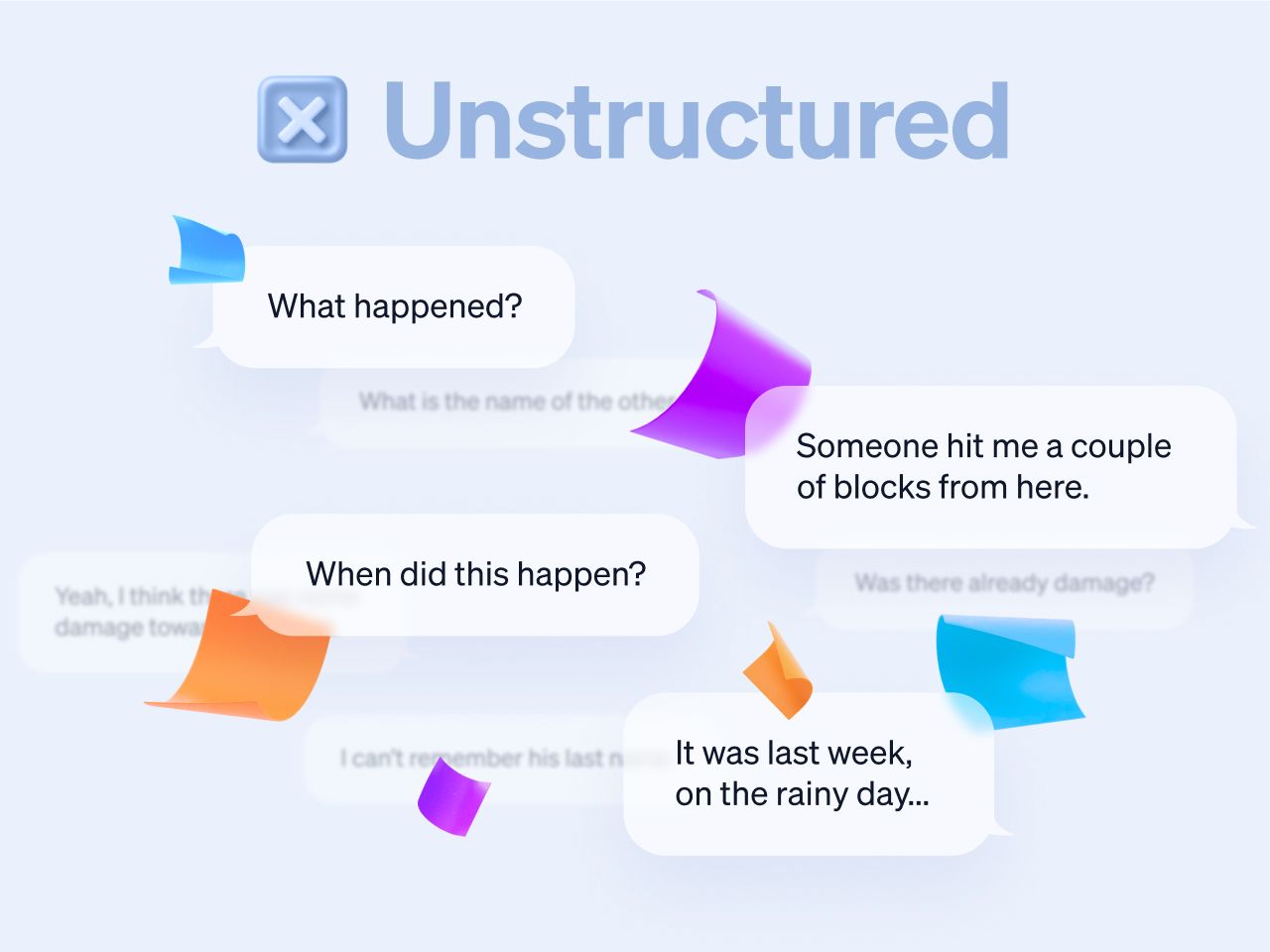
Traditional FNOL asks open-ended questions like ‘What happened?’ The free-form responses vary wildly from claim to claim. That unstructured data blocks automation, forcing manual cleanup and slowing everything downstream.
When data is inconsistent or incomplete, adjusters spend their time on cleanup instead of resolution. They're re-keying information, calling claimants for missing details, and manually routing claims that should flow automatically.
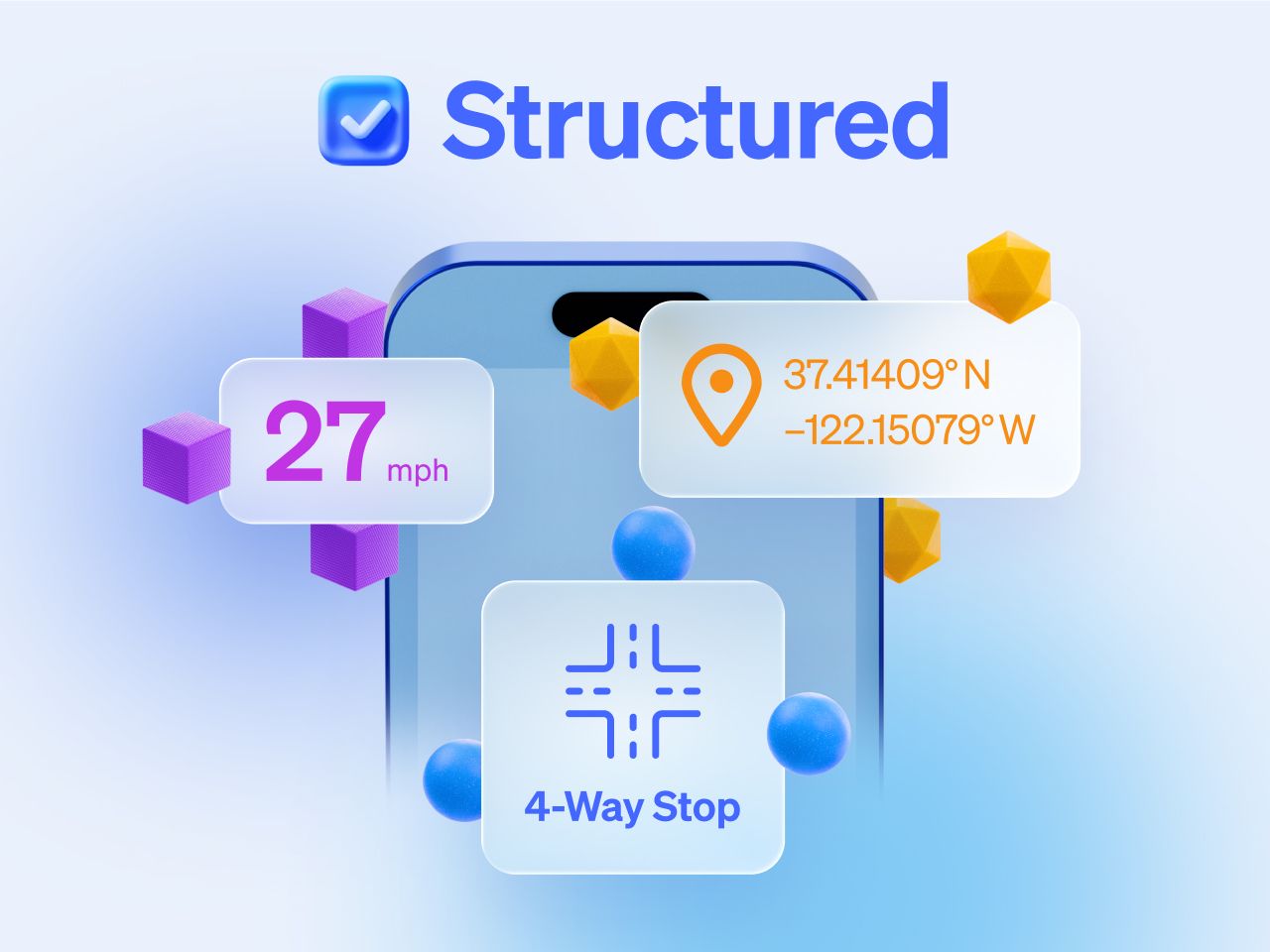
Modern FNOL uses guided questions to capture machine-readable data that flows directly into automated workflows. Digital solutions guide claimants through precise, context-aware questions and standardize inputs across channels.
The structured data collected at first notice of loss unlocks downstream automation. With fewer handoffs and less rework, documentation accelerates, exceptions surface earlier, and claims move forward with less manual intervention.
Most importantly, it’s a better experience for policyholders. Claimants answer only the questions that matter, without repetition or irrelevant follow-ups. The process feels intuitive and efficient, building confidence at the exact moment trust matters most.
FNOL form requirements: Essential data carriers must collect
A first notice of loss form is the standardized document or digital interface used to collect initial claim information from policyholders. Traditionally, these were paper forms or telephonic scripts. Today, leading carriers use digital intake to capture structured data through guided question flows.
Regardless of format, every first notice of loss form used to process FNOL claims collects the same critical fields. Here's what carriers need:
- Policyholder details: Name, policy number, relationship to the claim
- Contact information: Phone, email, preferred communication channel
- Incident details: Date, time, location of loss
- Loss type: Collision, theft, water damage, fire, etc.
- Visual documentation: Photos or attachments showing damage
- Third-party information: Other involved parties, witnesses, police reports
The difference between adequate and effective FNOL is not what information is collected, but how it’s captured. Digital enrollment platforms incorporate identity verification and intelligent, adaptive question flows to capture higher-quality data than traditional methods while delivering a better customer experience. That’s why starting with a structured data foundation for FNOL has an outsized impact on everything that follows.
Collecting the right data is essential, but the real value emerges in what that data enables downstream.
Structured FNOL data becomes the foundation for intelligent automation across the entire claims lifecycle.
Why structured FNOL data unlocks downstream automation
When it comes to claims automation, AI is the engine, but data is the fuel. AI can decrease errors throughout the claims process, but only when it has quality data to work with.
For example: When FNOL captures structured vehicle damage data (front-end collision, airbag deployment, third-party involved), agentic AI can automatically order an inspection, notify the claimant's preferred body shop, and initiate subrogation — without adjuster intervention.
The impact of structured data cascades through the entire claims lifecycle, from accurate triage and automated service assignment to liability determination, fraud detection, and generative AI actions.
Structured data from First Notice Of Loss powers accurate downstream automation. It enables agentic AI to gather additional information, send proactive updates, and automate routine follow-ups. Beyond AI-powered automation, it surfaces fraud signals earlier in the lifecycle, when intervention is most effective. And it creates the audit trail carriers need for compliance and defensibility.
Understanding what structured data enables is one thing. Seeing how leading carriers deploy it in practice is another.
How modern FNOL platforms cut cycle time and improve customer experience
FNOL has evolved far beyond simple intake. AI-powered FNOL platforms unlock automation at every stage of the claims lifecycle, leading to improved accuracy and improved operational efficiency.
Modern platforms connect structured FNOL data directly to the rest of the claims lifecycle, combining digital intake, omnichannel communication, intelligent routing, automated service assignment, and AI-driven follow-ups into a single, cohesive workflow.
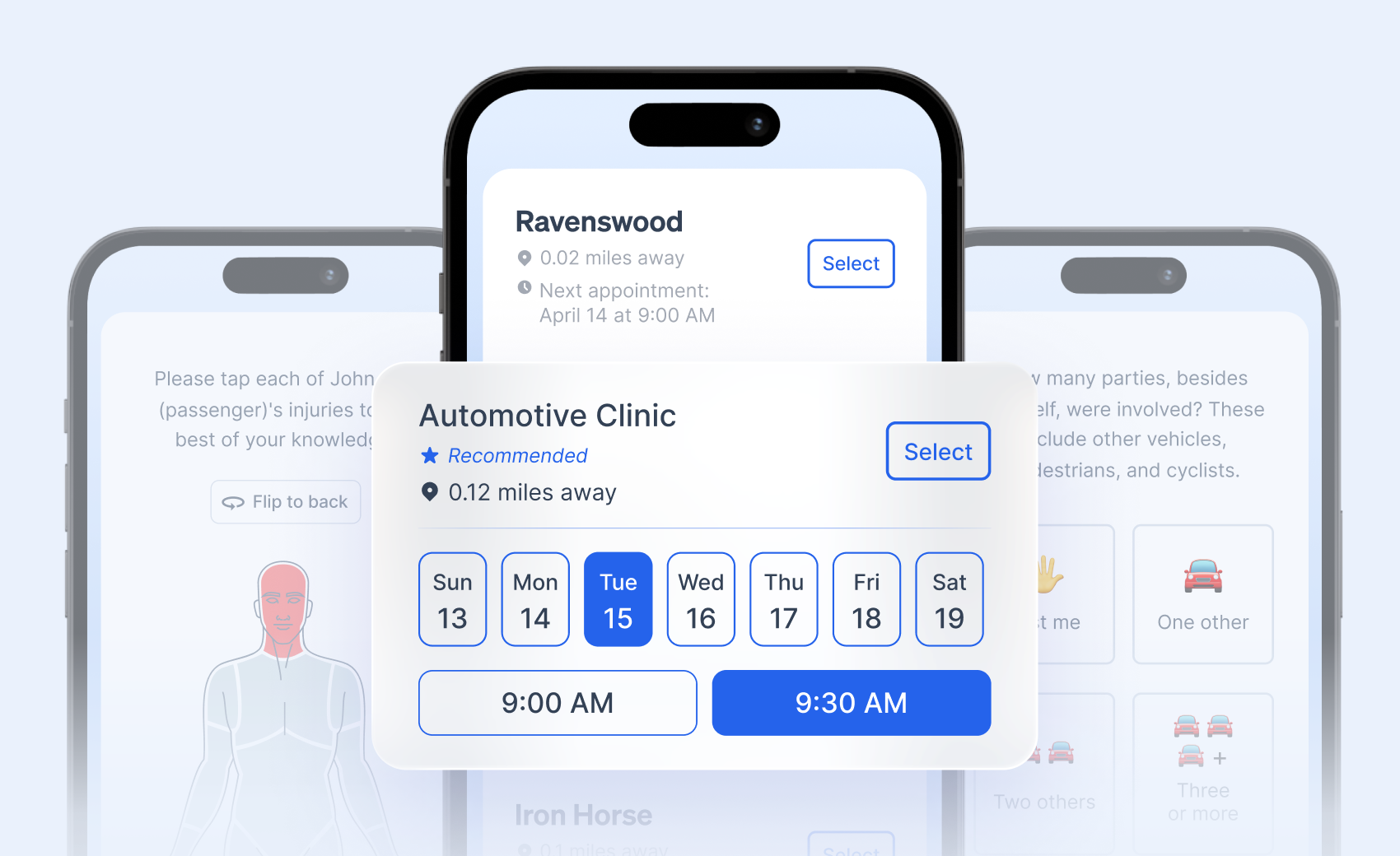
Modern claims services FNOL platforms transform the policyholder experience. For policyholders, the experience is faster and more intuitive. Claims can be reported 24/7 through web, mobile, SMS, or voice. Questions are relevant, not repetitive. Services like inspections, rentals, or repairs can be scheduled automatically. Updates arrive in real time, without the need to call in or repeat information.
Structured FNOL data flows seamlessly into your existing systems, triggering assignment, documentation requests, fraud checks, and next best actions without manual intervention. Your claims team closes more claims per adjuster. Chief Claims Officers see cycle times fall and NPS rise. Innovation leaders gain a flexible foundation for continuous improvement—without locking into a single, monolithic vendor.
These outcomes don't happen by accident. They result from optimizing each stage of the FNOL process flow. Let's walk through how modern FNOL works from initial report to claim assignment, and where structured data creates the most impact.
The FNOL process flow: Step-by-step overview
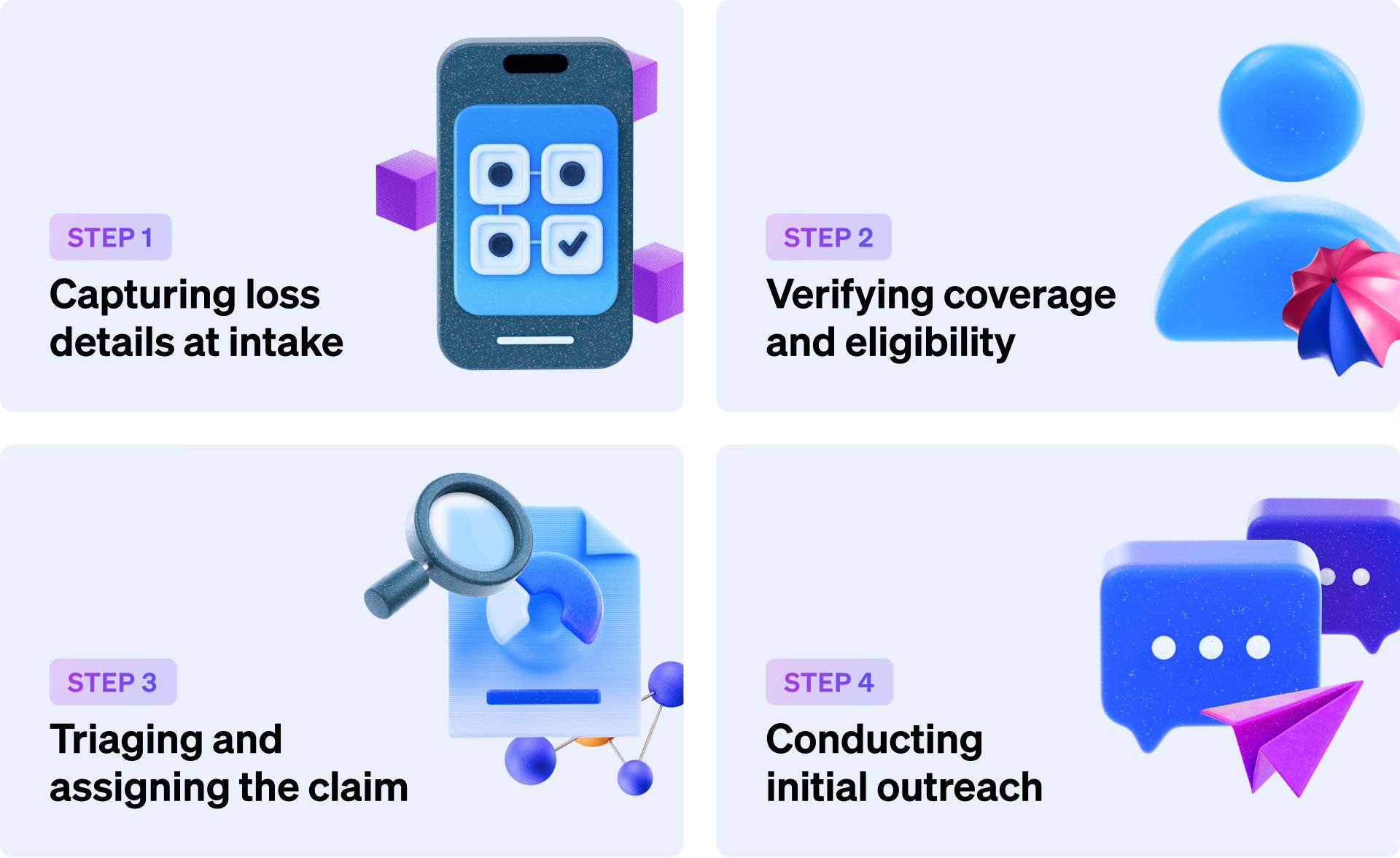
Understanding the FNOL process flow is critical to identifying optimization opportunities. In FNOL claims workflows, the process typically begins the moment a policyholder reports a loss and ends when the claim is assigned for handling. Understanding each stage helps carriers identify where friction lives and where there are opportunities to improve customer experience.
Step 1: Capturing loss details at intake
The FNOL process flow starts when the policyholder reports their loss, which typically happens online or over the phone. Traditional telephonic FNOL often results in free-form notes, with representatives typing as they listen, often missing key details or introducing inconsistencies.
Modern FNOL replaces this variability with structured, guided intake across every channel. Digital self-service flows adapt in real time to the claim context, while solutions like Sidekick bring the same structured logic into the call center. In both cases, FNOL captures machine-readable data from the very first interaction.
Step 2: Verifying coverage and eligibility
Once the loss is reported, the carrier verifies coverage, confirms claim type, checks deductibles, and validates loss details against policy terms. This step sounds straightforward. In reality, FNOL claims data gaps trigger unnecessary communication.
Missing incident dates. Unclear damage descriptions. No third-party contact information. Each gap triggers a follow-up call, extending cycle time and frustrating both adjusters and policyholders. Structured FNOL prevents these gaps before they happen.
Step 3: Triaging and assigning the claim
Once loss details are confirmed, the claim is triaged and routed to the appropriate path. Triage decisions are determined by signals such as loss type, severity indicators, policy features, jurisdiction, and available adjuster capacity.
This is where data quality compounds. Clean, structured FNOL data enables intelligent routing that matches each claim to the right workflow and level of expertise from the start. Incomplete or unstructured data forces manual review, increases misassignment, and introduces delays that ripple through the rest of the claim.
Structured FNOL also helps surface fraud indicators earlier, giving carriers a better chance to flag suspicious claims before they are misrouted or advanced too far downstream.
During CAT events, targeted FNOL flows personalize intake to ensure carriers ask the right questions to get claims routed to the right specialists as soon as possible.
Step 4: Conducting initial outreach
After assignment, the FNOL process flow moves into First Contact, the stage where carriers begin engaging not just the policyholder, but everyone involved in the loss. This includes drivers, passengers, witnesses, property owners, vendors, and other third parties required to move the claim forward.
Traditionally, this outreach is fragmented across different channels and highly manual. Modern First Contact workflows centralize these interactions through unified omnichannel claims communication (text, email, and secure portals) so all conversations, regardless of channel, are tied directly to the claim.
When FNOL captures comprehensive, accurate data upfront, First Contact becomes faster and more effective. Adjusters can automatically reach out to the right parties, request missing documents, and clarify details without repetitive follow-ups. Structured intake allows adjusters to spend less time chasing information and more time resolving claims.
With the right information from intake, automated service assignment lets users self-schedule inspections, repairs, rentals, or other services without additional manual coordination.
Process optimization only works when policyholders report losses promptly. This is where timeline requirements become critical.
FNOL timeline requirements: Why prompt reporting matters
Most P&C policies include a notice of loss and timelines provision requiring policyholders to report losses promptly. Understanding these notice of loss requirements helps carriers design FNOL processes that meet both regulatory obligations and customer expectations. While often framed as a compliance requirement, timing matters for a more practical reason: Prompt reporting allows carriers to investigate while evidence is fresh, reduces fraud risk, and enables faster resolution.
When policyholders delay notification—due to confusion, inconvenience, or simply not knowing the process—carriers face extended cycle times and increased claim complexity. Delayed notice leads to degraded recall and inconsistent narratives, forcing adjusters to rely on assumptions and manual follow-ups. This slows investigations and limits downstream automation.
Regulatory frameworks vary by state and line of business, but the principle remains consistent: Timely notice protects both parties. Policyholders preserve their coverage rights, and carriers can fulfill their obligations efficiently.
Digital FNOL tools make meeting these timeline expectations easier than ever. Instead of waiting on hold for an adjuster, self-service digital portals are available 24/7. Mobile-friendly interfaces and guided question flows eliminate friction so policyholders can report losses easily and immediately. When notice of loss happens quickly, carriers can act sooner and more effectively. Faster FNOL-to-settlement workflows accelerate the entire claims lifecycle.
We've covered what FNOL is, why it matters, how the process flows, and why prompt reporting accelerates outcomes. Now let's look at the measurable results carriers achieve when they get FNOL right.
Transform FNOL from intake to strategic advantage
The foundation you build at First Notice of Loss determines everything downstream. Carriers using Assured turn FNOL into their strategic advantage, cutting cycle time and reducing phone calls.
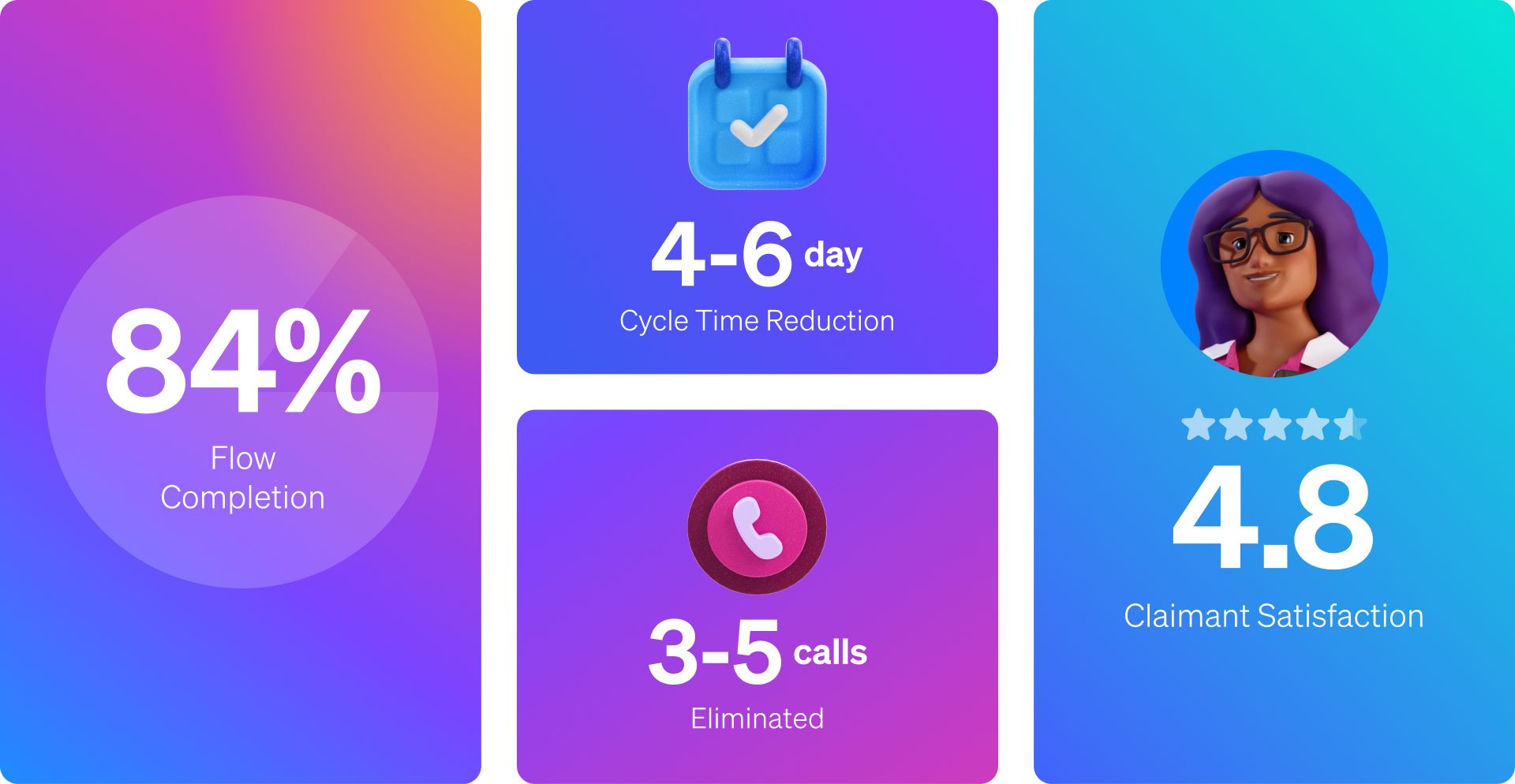
The 12-day gap between policyholder expectations and industry reality starts at FNOL. Structured data at intake enables straight-through processing, intelligent routing, and operations that scale without proportional increases in headcount.
Request a demo to see how Assured captures machine-readable data from first notice of loss and unlocks downstream automation without replacing your core systems.
Last modified on August 25, 2026

Subscribe for updates
You might also like

The FNOL process: A step-by-step breakdown
Understand the FNOL process and learn how structured data improves accuracy, speed, and automation.
By The Assured Team


Subscribe for updates
By providing your email, you indicate you have read and understood our Privacy Policy.