




Every claim begins at First Notice of Loss (FNOL), and the quality of that moment shapes everything that follows. Before an adjuster ever touches the file, the FNOL process determines how fast a claim moves, how clean the data is, and whether automation can actually work. Poor intake creates downstream drag. Strong intake unlocks straight through processing.
As claims become more complex and policyholders’ expectations continue to rise, the FNOL process has become one of the highest leverage points in the claims lifecycle. Modernizing intake doesn’t just improve efficiency. It directly impacts cycle time, loss adjustment expense, and customer satisfaction.
In this post, we break down what the FNOL process is, how it differs from and fits into the broader claims lifecycle, and how modern, digital FNOL solutions help carriers turn FNOL into their competitive advantage.




Assured: The leading AI platform in P&C
Trusted by the nation’s top insurers, Assured processes tens of millions of claims each year, delivering straight-through processing at enterprise scale.
Learn moreWhat is the FNOL process?
In insurance, FNOL is the first moment an insurer learns that a loss has occurred. Many carriers underestimate FNOL’s impact on the full claims lifecycle. Intake is often treated as an administrative step to complete, so the “real” claims work can begin. In reality, understanding what the FNOL process is and how it impacts downstream automation is the key to achieving true straight-through processing.
FNOL sets the data foundation for everything that follows. If intake data is incomplete, inconsistent, or unstructured, downstream automation breaks. Adjusters are forced to rework basic information, clarify narratives, and correct routing decisions. Cycle times stretch. Automation stalls.
Historically, the FNOL process relied on phone calls, manual notes, and loosely structured scripts. Those methods captured narrative text that humans could read, but systems could not act on. As a result, adjusters spent days reworking intake, clarifying basics, and correcting misrouted claims.
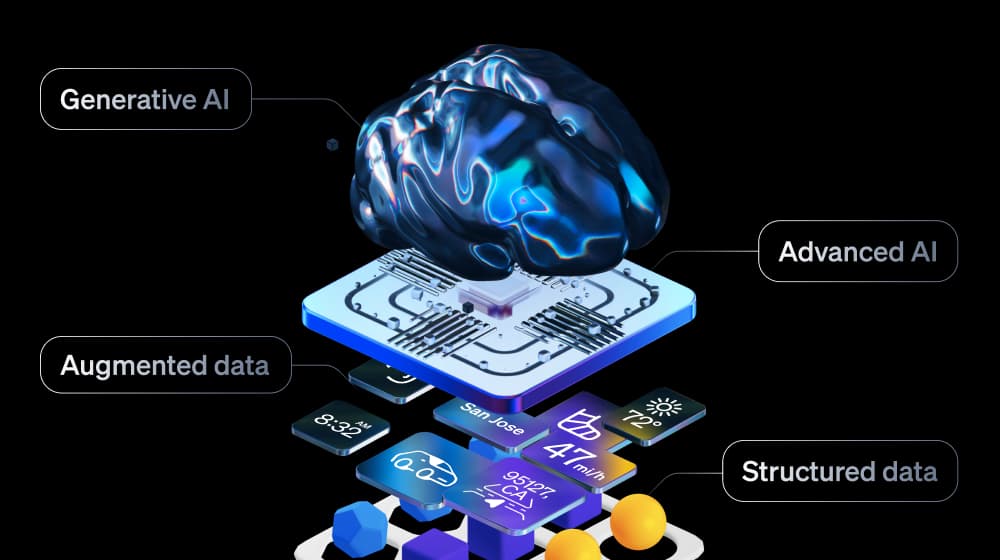
Modern FNOL insurance workflows treat intake as a data foundation, not an administrative task. Structured questions collect loss information as machine-readable data from the start of the claim. Digital FNOL leverages digital omnichannel technology to collect complete, structured data once, then use it throughout the claims lifecycle. This superpowers the first step of the claims process, enabling carriers to collect higher-quality data and achieve true straight-through processing.
FNOL process flow: A step-by-step breakdown
The FNOL process flow typically includes five major stages. While the specifics vary by carrier and line of business, the foundational FNOL process follows a consistent operational pattern.
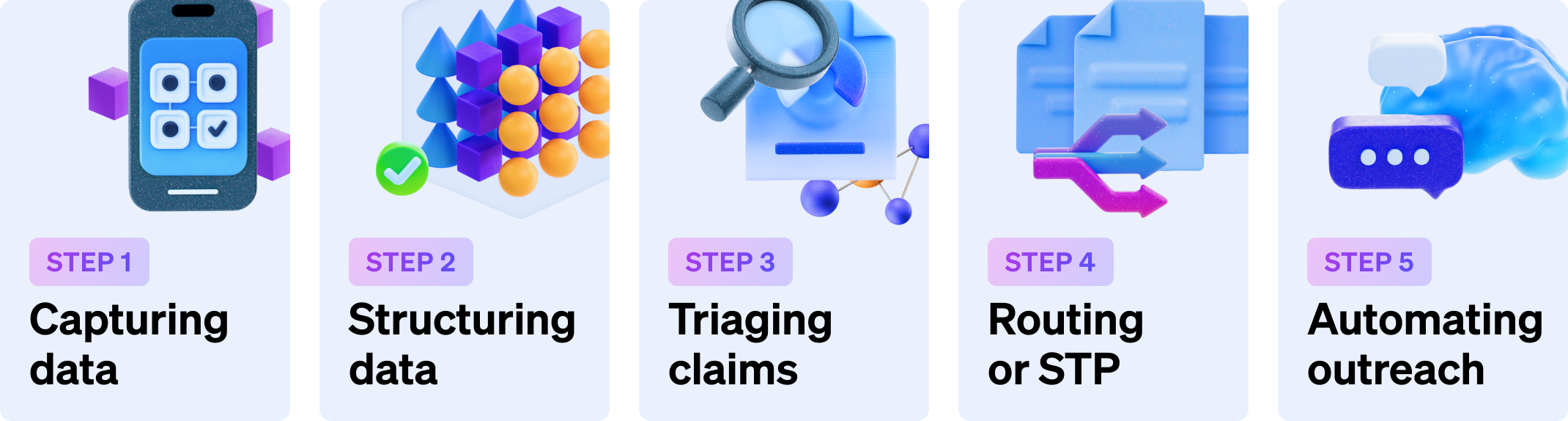
Step 1. Capturing incident data through digital channels
The process begins when a policyholder or claimant reports a loss. This may happen through a call center, web form, mobile app, or messaging channel. In insurance, FNOL is critical because how the data is captured at the start of a claim determines everything that follows.
Unstructured intake captures whatever details surface in the moment and leaves gaps that must be corrected later. Structured FNOL is intentional. It ensures critical facts like dates, locations, involved parties, affected assets, and loss circumstances are captured consistently and in machine-readable formats that can be used for downstream automation.
Step 2. Structuring and validating data in real time
Once the loss is reported, carriers confirm the claimant’s identity and validate policy details such as coverage status, deductibles, and limits. When FNOL data is structured, validation can happen automatically. When it’s not, adjusters or service teams must reconcile discrepancies manually.
This step often exposes gaps created at intake. Missing identifiers or unclear asset information lead to follow-up calls, rework, and delays.
Step 3. Triaging claims with intelligent severity scoring
In the FNOL process, triage determines how a claim moves through the system. Severity, loss complexity, location, and policy type all influence whether a claim is routed for fast-track handling, specialist review, or escalation.
In FNOL insurance workflows, poor intake data leads to routing failures. Claims land in the wrong queues, bounce between teams, or stall while details are clarified. Structured FNOL data enables rapid, rules-driven triage and automation by giving systems the signals they need to act immediately.
During catastrophe events, CAT-specific FNOL workflows help carriers absorb surge volume, triage claims faster, and maintain consistency even when incoming demand spikes.
This is also the point where fraud signals can be surfaced early, so suspicious claims are flagged before they move down the wrong path and create rework later in the process.
Step 4. Routing claims or enabling straight-through processing
In this stage in the FNOL process flow, claims are routed either to an adjuster, a specialty team, or an automated workflow. Routing decisions depend entirely on the quality of FNOL data. Poor intake leads to misrouting, reassignment, and queue churn.
This is where automation can meaningfully reduce workload. Routine interactions and follow-ups can be handled without adjuster intervention using agentic AI assistants. Assured’s agentic AI, Emma, handles 70% of interactions autonomously, managing routine follow-ups and information gathering while adjusters focus on exceptions and complex decisions.
For eligible claims, automated service assignment makes it possible to schedule inspections, repairs, rentals, or other services immediately instead of waiting on manual handoffs.
Step 5. Automating outreach and document collection
Once FNOL is complete, the customer receives confirmation through text, email, or a self-service portal. Clear next steps reduce uncertainty and prevent inbound calls. Carriers that pair structured FNOL insurance data with a digital claims intake workflow consistently see shorter cycle times and higher customer satisfaction scores.
The FNOL process sets the trajectory for everything that follows, including document collection, inspections, coverage review, and settlement.
What happens after the FNOL process?
The FNOL process sets the trajectory for everything that follows, including document collection, inspections, coverage review, and settlement.
Missing or inconsistent data triggers downstream friction. Adjusters request documents that should already exist. Service providers are scheduled incorrectly. Liability questions surface late, forcing rework. Each issue adds time and cost. Early gaps compound into longer cycle times and higher servicing costs.
When FNOL data is structured from the start, follow-up work becomes predictable and fast. Systems can automatically request documents, trigger inspections, flag inconsistencies for fraud review, and route claims without manual intervention. This is how carriers achieve speed to value and scale operations without adding headcount. It is also why digital portals enhance post-FNOL processes, turning intake data into automated action instead of downstream cleanup.
How structured data improves each step of the FNOL process
AI is the engine, but data is the fuel. Structured data from FNOL unlocks downstream automation by giving systems structured, high-quality data they can act on.
At intake, structured FNOL data improves accuracy by design. Required fields, validation rules, and adaptive questioning ensure critical details are captured consistently, not buried in narrative text. This reduces errors before they begin and reduces adjuster rework.
During verification, clean data enables faster confirmation of coverage, loss timing, and involved parties. Instead of pausing claims to request missing information, systems can automatically validate inputs and trigger follow-ups only when needed.
Triage becomes more precise because early defined severity, policy type, and loss characteristics allow claims to be routed the first time, supporting enhanced triage mechanisms and predictive analytics.
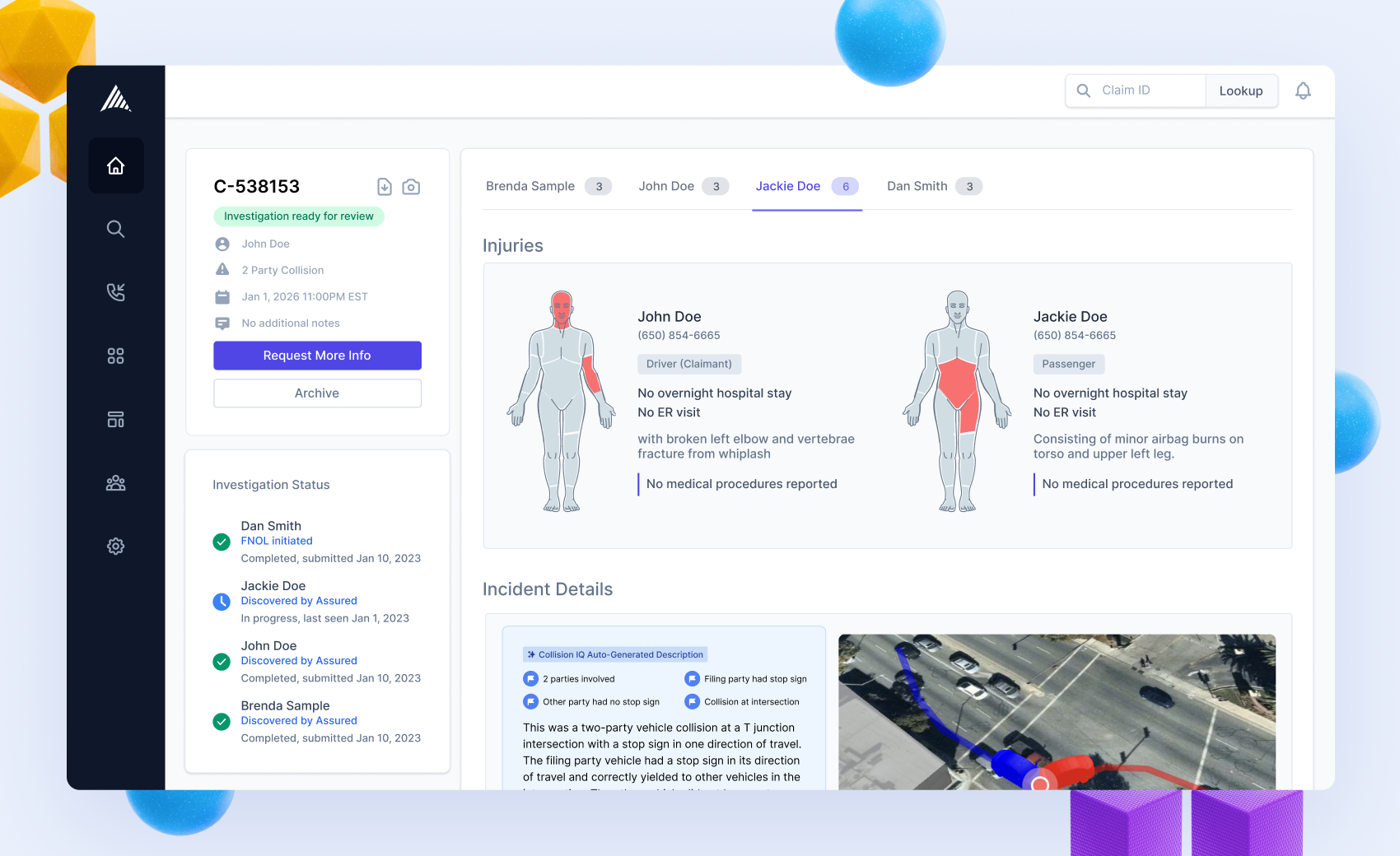
Carriers that start with structured FNOL achieve faster cycle times because fewer issues need to be corrected later. Adjusters close more claims per day because they’re not chasing basic information.
How the FNOL process unlocks AI automation
Assured uses the structured data from FNOL to power automation throughout the claims lifecycle. Sidekick brings the same structured logic to telephonic intake, helping call center teams capture cleaner data without relying on free-form notes. First Contact automates post-FNOL outreach, Emma manages routine interactions and follow-ups, and Messaging keeps communication centralized as the claim progresses.
Together, these capabilities demonstrate how a digital FNOL process, combined with AI-powered solutions, delivers measurable efficiency gains, faster cycle times, and improved adjuster productivity without adding headcount.
Common challenges in the FNOL process and how carriers solve them
Carriers face several recurring challenges in the FNOL process. When loss details are captured as free text, intake becomes highly prone to human error and inconsistency. Different adjusters ask different questions, interpret answers differently, and document losses in their own words, producing fragmented narratives for similar incidents. That variability makes data unreliable, breaks downstream automation, and forces rework as teams reconcile gaps and discrepancies.
Manual re-entry is another major issue. Information collected at FNOL often has to be retyped into downstream systems, increasing errors and slowing the process. Routing errors follow. Claims are sent to the wrong teams because the severity, policy type, or loss details were unclear at intake.
Slow follow-ups compound these problems. When systems cannot act on FNOL data, adjusters must manually request documents and clarifications. Each handoff adds time and frustration for the customer.
Carriers that collect structured data at FNOL see measurable improvements at every stage of the claims lifecycle and drastically simplify claims processing by capturing and thoroughly validating information upfront.
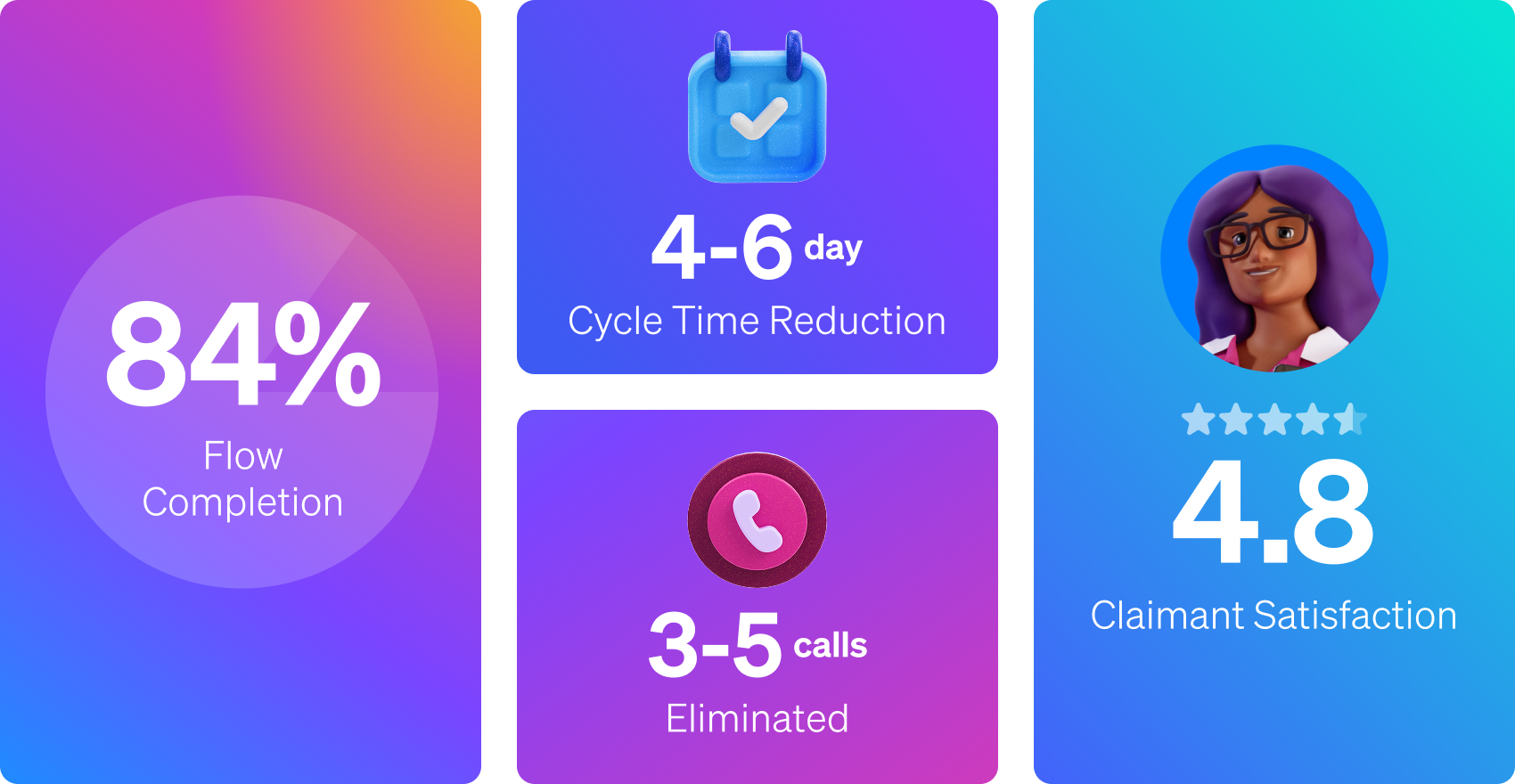
See the FNOL process in action across modern claims teams
Structured intake allows teams to scale without proportional headcount increases by absorbing routine work through automation and freeing adjusters to focus on complex cases that require judgment. Claims leaders also gain earlier visibility into performance and risk, instead of reacting to issues weeks into the lifecycle.
For customers, the impact is immediate. Faster responses, clearer guidance, and fewer redundant requests reduce frustration during an already stressful moment. When the claims process feels organized, responsive, and predictable from the start, confidence increases, satisfaction improves, and trust in the carrier strengthens.
Learn how Assured can transform your FNOL process
With Assured’s platform, structured data, automation, and AI work together to turn FNOL from a reporting step into a true operational foundation for the entire claims lifecycle.
Automation removes routine work and reduces manual follow-ups, while AI supports smarter routing, prioritization, and timely, consistent communication. The result is faster decisions, lower servicing effort, improved adjuster efficiency, and a clearer, more reliable experience for policyholders from first notice through resolution.
Book a 30-minute session to review your FNOL process.
Last modified on August 25, 2026

Subscribe for updates
You might also like
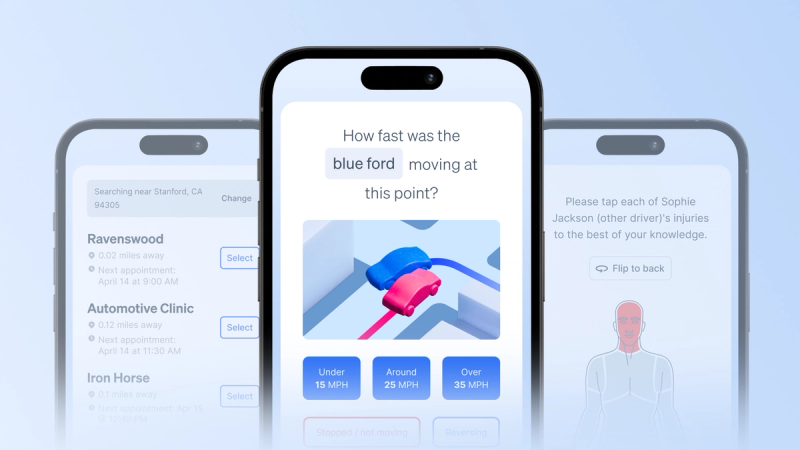
FNOL automation: How AI is transforming claims intake
Learn how AI-powered FNOL automation helps carriers reduce cycle time and improve accuracy.
By The Assured Team


Subscribe for updates
By providing your email, you indicate you have read and understood our Privacy Policy.